MENU
© 2026 CricDesi Media

Search: "SKY"

Results Found: 19

Category
Sort By
Kagiso Rabada 3 Wickets at Chepauk vs CSK
ipl 2026

Kagiso Rabada 3 Wickets at Chepauk vs CSK

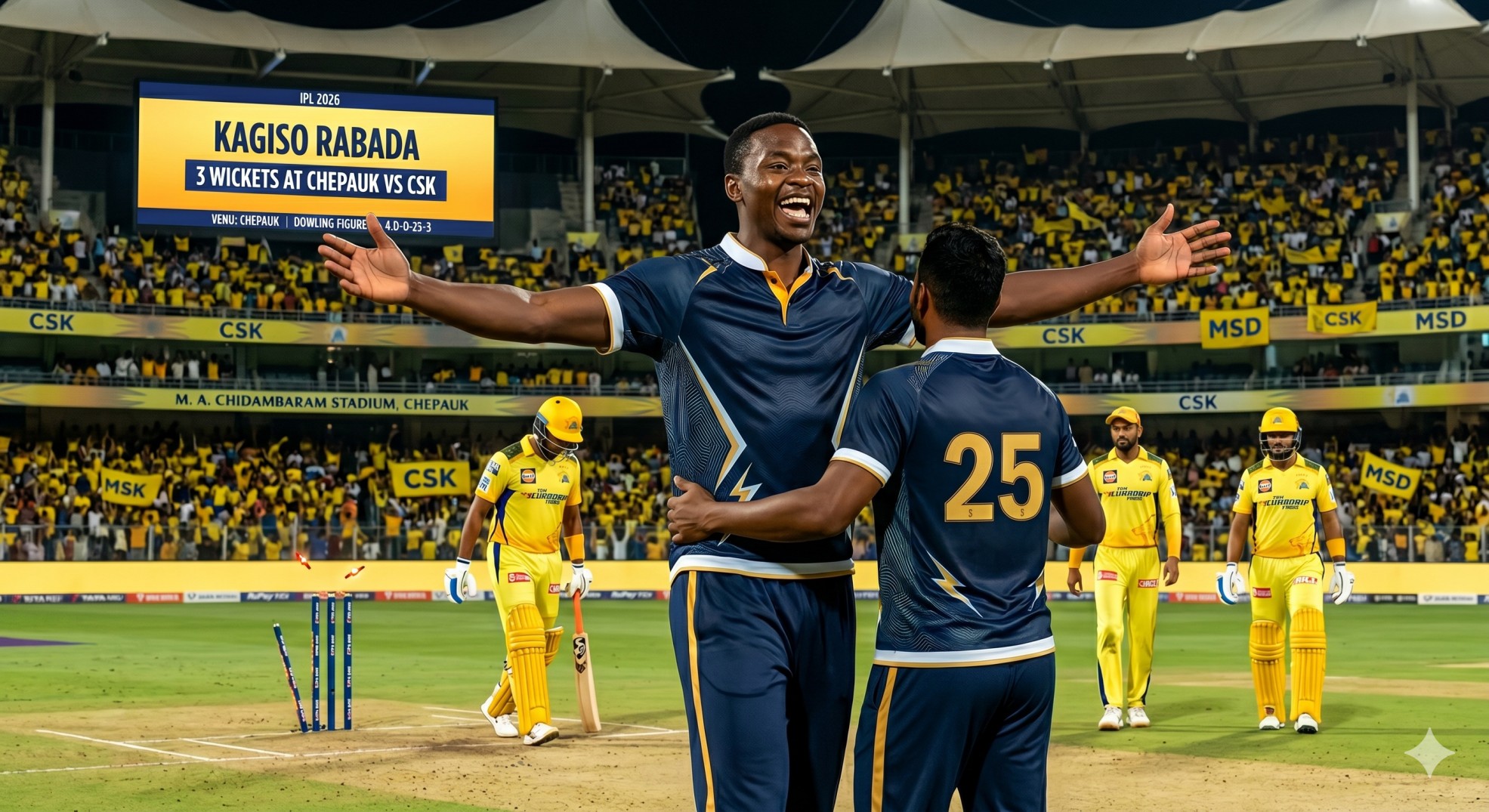
Kagiso Rabada took 3 wickets to rattle CSK to 37/4 in the powerplay at MA Chidambaram Stadium in IPL 2026 Match 37. The South African pacer's lethal spell in the Chennai heat was the difference between the two sides.The sweltering afternoon at the MA Chidambaram Stadium saw a clinical exhibition of fast-bowling mastery as Kagiso Rabada delivered a spell that fundamentally altered the tactical landscape of Match 37. Amidst a punishing 34°C heat and oppressive humidity that typically favors the local spinners, the South African spearhead proved that raw pace and relentless accuracy are universal assets. Rabada’s initial burst was nothing short of a catastrophe for the Chennai Super Kings, as he dismantled their top order with surgical precision, reducing the home side to a staggering 37/4 within the Powerplay. This was not merely a performance fueled by physical effort; it was a psychological assault on a franchise that historically prides itself on its Chepauk fortress, leaving the yellow-clad faithful in a state of stunned disbelief as their primary anchors were sent back to the dugout in rapid succession.IPL 2026: Match 37 — CSK vs GT Summary & StatsMatch SummaryCategoryMatch DetailsVenueMA Chidambaram Stadium (Chepauk), ChennaiCSK Score158/7 (20 Overs)GT Score162/2 (16.4 Overs)ResultGT won by 8 wicketsPlayer of the MatchKagiso Rabada (3/25 - Powerplay Destruction)The narrative of Rabada’s "Destroyer" outing is a testament to the Gujarat Titans' scouting and tactical execution in IPL 2026. Following a similarly devastating performance against RCB earlier in the season, Rabada has emerged as the definitive enforcer of a GT bowling unit that now includes Mohammed Siraj and Rashid Khan. At Chepauk, Rabada specifically exploited the slight vertical bounce available in the new-ball surface, hurrying the batters with a hard length that offered no room for the trademark horizontal-bat shots favored by the CSK openers. His ability to maintain speeds in excess of 145 KPH despite the energy-sapping Chennai heat highlighted a level of conditioning and commitment that stands as a benchmark for overseas professionals in the league. Match Performance: Kagiso Rabada (GT)StatisticPerformance DataOverbowled4.0Wickets Taken3Runs Given25Economy Rate6.25Dot Balls14Key WicketsSanju Samson, Urvil Patel, and Kartik SharmaThe broader implications of this 3-wicket haul have resonated throughout the points table, as Gujarat successfully neutralized one of the most formidable home advantages in world cricket. By removing the pillars of the CSK batting lineup, Rabada effectively forced Ruturaj Gaikwad into a defensive shell, which eventually led to the slowest fifty of the 2026 season. For the readers at CricDesi, Rabada’s performance serves as a reminder that momentum in a tournament as long as the IPL is often dictated by individual "X-factor" spells. As the South African pacer walked off the field, having effectively silenced one of the loudest crowds in the sport, it was clear that he remains the primary reason why the Gujarat Titans are surging back into playoff contention.The Finishers: GT Record-Breaking ChasePlayerRunsBallsStrike RateImpactSai Sudharsan8746189.13The Match-WinnerJos Buttler39*30130.00Calmly steered the endShubman Gill3323143.48Aggressive Powerplay startKagiso Rabada3/254 OversN/AAs the 2026 season moves into its critical midphase, the "Rabada Factor" has become the primary scouting headache for opposition coaches. He has proven that he does not need a green-top or a bouncy track to be effective; his skill set is adaptable enough to conquer the slow, turning square of Chennai. This performance was a masterclass in situational awareness, where he transitioned from a pure strike bowler in the Powerplay to a restrictive force in the middle overs, finishing with figures that reflect total dominance. While the local conditions were designed to favor the home side, Kagiso Rabada rewrote the script, proving that in the theater of the IPL, the most potent weapon is often the one that refuses to be intimidated by the heat or the history of the venue.Top Performers of the MatchSai Sudharsan (GT): 87 (46) — The demolition man of Chepauk.Ruturaj Gaikwad (CSK): 74* (60) — Unbeaten but over-cautious.Kagiso Rabada (GT): 3/25 (4.0) — Took wickets of Samson & Urvil Patel.Sanju Samson (CSK): 11 (15) — Reached 5000 IPL Runs during the game.Shivam Dube (CSK): 22 (17) — Crossed 2000 IPL Runs.The technical supremacy of Kagiso Rabada’s performance in Match 37 was most evident in his masterful manipulation of the "corridor of uncertainty" during a high-humidity afternoon. While most pacers struggle to find grip with a sweaty ball, Rabada’s seam presentation remained upright and impeccable. Statistically, his opening burst was a death knell for the Chennai Super Kings; he delivered 14 dot balls out of his 24 deliveries, meaning 58% of his spell yielded no runs for the home side. This restrictive pressure forced Sanju Samson into a risky cross-bat swipe that resulted in a leading edge, and similarly hurried Urvil Patel into a mistimed pull. By the time the Powerplay concluded, Rabada had not only claimed three wickets but had also effectively "frozen" the scoreboard, ensuring that the required run rate for a competitive total was already slipping out of reach.Kagiso Rabada: IPL 2026 Season Stats (GT)MetricSeason TotalTotal Wickets13Average18.50Economy Rate7.95Best Bowling3/25 (vs CSK)Dot Ball Percentage42%The most compelling aspect of this "Destroyer" spell was the tactical irony of the venue. Yet it was the South African pacer who extracted the most "bite" from the surface. Rabada utilized a heavy-ball tactic, hitting the pitch with such force that the variable bounce became a nightmare for the CSK middle order. As a journalist observing the technical shift, it was clear that Rabada has evolved beyond a pure "speedster" into a "conditions specialist" who understands exactly how to adjust his lengths for the abrasive Indian squares.For the readers at CricDesi, Kagiso Rabada has officially become the heartbeat of the Gujarat Titans' 2026 resurgence. With 14 wickets in the bag, he is now a primary contender for the Purple Cap, trailing only slightly behind the league leaders. His ability to deliver under the 34°C Chennai sun, while maintaining peak velocity, is a testament to his world-class athleticism. As the Titans climb to the 4th spot on the points table with 10 points, the message to the rest of the league is clear: if you cannot survive the "Rabada Storm" in the first six overs, your chances of winning against GT are virtually non-existent.Founder's Questions: CSK was 37/4 after 6 overs. As a founder, I have to ask: Is the Chennai top order—specifically Urvil Patel and Kartik Sharma—too vulnerable against high-velocity pace like Rabada's 145+ KPH thunderbolts?

Apr 26, 2026 Harshvardhan Singh Gaur
Kagiso Rabada: The Destroyer vs MI
ipl 2026

Kagiso Rabada: The Destroyer vs MI

Kagiso Rabada took 3 wickets in powerplay — Malewar, De Kock & SKY — reducing MI to 46/3 vs GT in IPL 2026. But Tilak Varma's 101* ensured Rabada spell was ultimately in vain.The Narendra Modi Stadium witnessed a masterclass in powerplay bowling that momentarily threatened to push the Mumbai Indians into an abyss, only for the narrative to be completely rewritten by the end of the night. Kagiso Rabada, operating with the kind of hostile intent that has made him a global icon, dismantled the MI top order with a spell of 3/33 that left the visitors reeling at 46/3 within the first six overs. His dismissals were a showcase of pure pace and tactical precision: trapping debutant Danish Malewar for 2, outfoxing Quinton de Kock for 13, and uprooting Suryakumar Yadav’s stumps with a 152.1 kph thunderbolt. For the first hour, it appeared that the Gujarat Titans’ decision to bowl first was a stroke of genius, as Rabada effectively became the leading wicket-taker in the power play for the IPL 2026 season.IPL 2026: Match Summary & StatsMatch Summary: MI vs GTCategoryMatch DetailsVenueWankhede Stadium, MumbaiMI Score199/5 (20 Overs)GT Score100 All Out (15.5 Overs)ResultMI won by 99 runsPlayer of the MatchTilak Varma (101* off 45)However, the beauty of cricket lies in its ability to produce counter-narratives. While Rabada’s initial surge was destructive, it ultimately set the stage for one of the greatest recovery acts in the league’s history. Tilak Varma, entering the fray under immense pressure, navigated the storm with the composure of a veteran before unleashing a late-innings assault that rendered Rabada’s early heroics a mere footnote. Varma’s unbeaten 101 off 45 balls—equalling Sanath Jayasuriya for the fastest century in MI history—shifted the momentum so violently that the Titans never recovered. By the time MI finished at 199/5, the psychological damage was done, proving that in T20 cricket, a brilliant individual spell can be completely overshadowed by a single, perfectly timed gear shift from an elite batter.Match Performance: Kagiso Rabada (GT)StatisticFiguresOverbowled4.0Wickets Taken3 (Malewar, De Kock, SKY)Runs Given33Economy Rate8.25Powerplay Impact3 Wickets in first 6 oversJournalistically, Match 30 was a study in two distinct phases of dominance. Rabada owned the first six overs, but Tilak Varma owned the last fourteen. This 99-run victory for the Mumbai Indians acts as a vital spark for their campaign, while for Gujarat, it serves as a cautionary tale: even the most devastating bowling starts require a middle-order response that never came. As the Titans were bundled out for a meager 100 runs, the scorecard reflected a bizarre reality where Rabada’s fiery opening was the only highlight in a night otherwise defined by total Mumbai dominance.Match Performance: The Unsung HeroPlayerRunsBallsSRImpactNaman Dhir4532140.62Stabilized MI from 46/3Tilak Varma101*45224.44The Final ExplosionThe tactical duel between Kagiso Rabada and the Mumbai Indians' batting unit in Match 30 was a masterclass in shifting momentum, illustrating why Rabada remains one of the most feared exponents of the new ball in IPL 2026. Heading into this clash, the South African speedster had already established himself as the anchor of the Gujarat Titans' defense, but his performance at the Narendra Modi Stadium took his clinical precision to a new level. By removing Danish Malewar, Quinton de Kock, and the dangerous Suryakumar Yadav in his opening burst, Rabada didn't just take wickets; he dismantled the psychological foundation of the MI top order. His dismissal of SKY, in particular, was a moment of technical perfection—a 152 kph delivery that nipped back just enough to beat the bat and rattle the off-stump, a ball that would have troubled any batter in the history of the league.Kagiso Rabada: IPL 2026 Season StatsMetricTotalMatches6Wickets11Average22.40Strike Rate15.81Economy9.73Journalistically, Rabada's spell of 3/33 provides a fascinating statistical anomaly when viewed against the final result. In the first six overs, Rabada was operating at an economy rate of just 5.50, forcing the Mumbai Indians into a defensive shell that usually results in a sub-par total. His ability to hit the "hard length" consistently made it impossible for the MI openers to clear the infield, leading to the desperate shots that eventually caused their downfall. With 10 wickets in 6 matches this season, Rabada is now a frontrunner for the Purple Cap, proving that even in a season dominated by high-scoring totals, a world-class pacer can still dictate the terms of engagement during the powerplay.However, the "Rabada Factor" was eventually neutralized by a tactical adjustment from Tilak Varma that exposed the Titans' over-reliance on their primary strike bowler. Once Rabada had exhausted three of his four overs, the pressure on the supporting cast—including Rashid Khan and Noor Ahmad—became immense. Varma’s strategy was clear: survive the Rabada storm and exploit the middle-over secondary bowlers. By the time Rabada returned for his final over in the death phase, Varma was already well-set and playing with a strike rate exceeding 200. This shift turned Rabada’s earlier dominance into a distant memory, as Mumbai managed to put up a record-breaking 199/5.Top Performers of the MatchAshwani Kumar (MI): 4/24 (4 Overs) — Career-best figures.Jasprit Bumrah (MI): 1/15 (3 Overs) — First wicket of IPL 2026.Kagiso Rabada (GT): 3/33 (4 Overs) — Only bowler with economy < 8.00.For the Gujarat Titans, the primary takeaway from this 99-run defeat is the need for a "Plan B" when Rabada’s early breakthroughs aren't supported by the rest of the attack. While Rabada finished with respectable figures, the fact that the team was bundled out for 100 runs suggests a systemic failure in capitalizing on the platform he provided. As a journalist covering the league, it’s evident that while Rabada can win you the first six overs, the remaining fourteen require a collective resilience that GT currently lacks. As MI celebrates a season-reviving win, Rabada will likely look back at this match as a personal triumph that was ultimately betrayed by a lack of clinical execution from his teammates.Founder's Question"Kagiso Rabada was the only GT bowler to stay under 9 RPO while taking 3 top-order wickets. As a founder, do you think GT is becoming too 'Rabada-dependent,' or did the rest of the attack simply fail to capitalize on the 46/3 platform he provided?"

Apr 21, 2026 Harshvardhan Singh Gaur
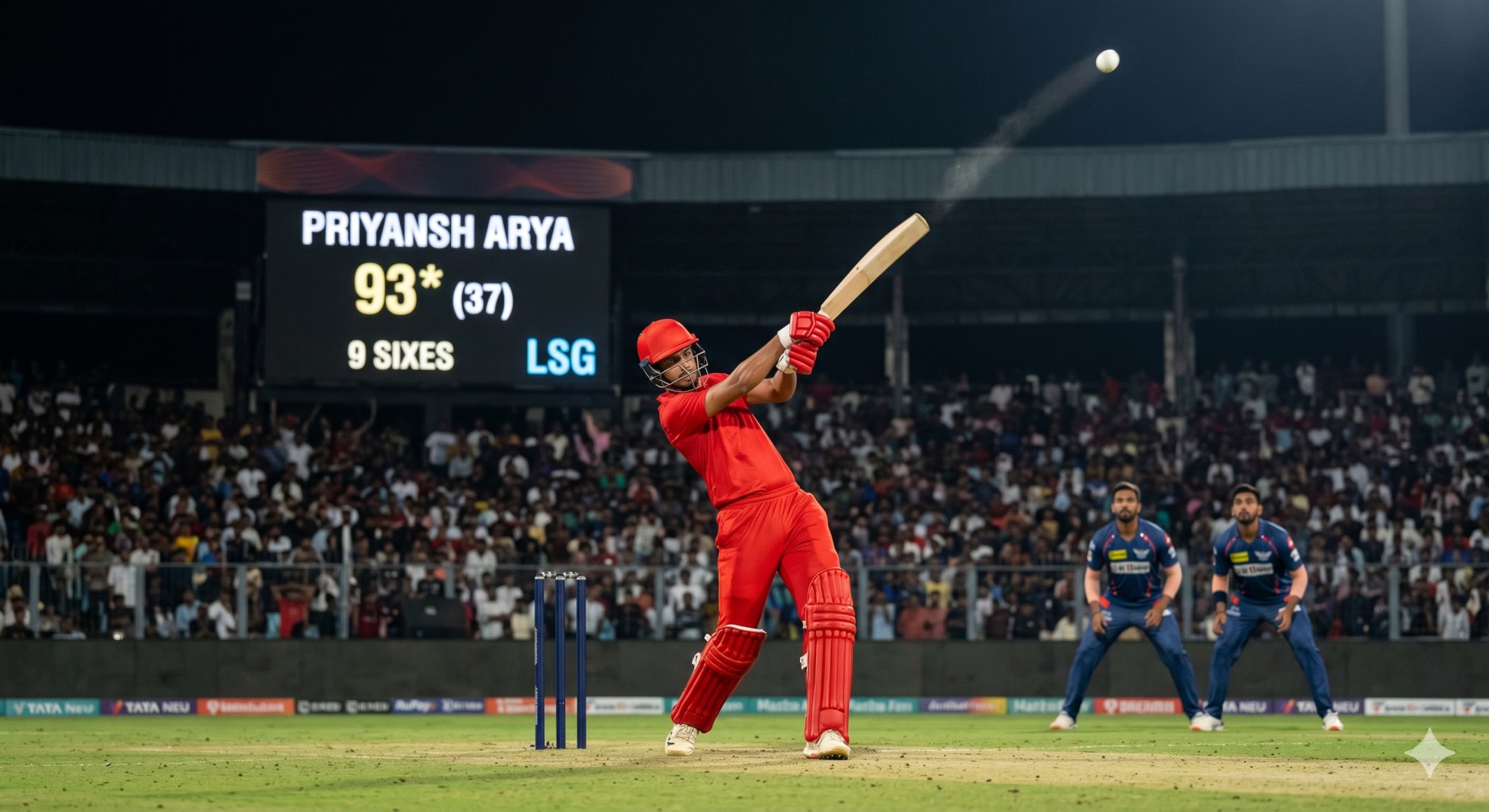
Priyansh Arya smashed 93 off 37 balls with 9 sixes vs LSG
ipl 2026

Priyansh Arya smashed 93 off 37 balls with 9 sixes vs LSG

Priyansh Arya smashed 93 off 37 balls with 9 sixes vs LSG, just 7 runs short of his second IPL century. His 182-run stand with Connolly powered PBKS to IPL 2026's highest total of 254.The atmosphere at the Maharaja Yadavindra Singh Stadium in Mullanpur was nothing short of electric as the Punjab Kings dismantled the Lucknow Super Giants' bowling attack in a display of pure, unadulterated power hitting. At the center of this storm was Priyansh Arya, a young man who played with the fearlessness of someone who had nothing to lose and the precision of a master craftsman. His 93 off just 37 deliveries was a masterclass in modern T20 batting, characterized by a staggering 19-ball half-century that left the opposition captain, Rishabh Pant, searching for answers that simply did not exist. Every time the ball left Arya’s bat, it seemed destined for the stands, as he sent nine towering sixes into the night sky, effectively turning the stadium into a graveyard for LSG’s bowling figures.IPL 2026: Match 29 Summary & Stats Match Summary: PBKS vs LSGCategoryDetailsVenueMaharaja Yadavindra Singh Stadium, MullanpurPBKS Score254/7 (20 Overs) — New IPL 2026 RecordLSG Score200/5 (20 Overs)ResultPBKS won by 54 runsPlayer of the MatchPriyansh Arya (93 off 37)The tragedy of the evening, if one could call it that in the middle of such a dominant victory, was the manner of Arya’s departure. Standing just seven runs away from what would have been a historic second IPL century, he lofted a delivery toward long-off, only to see Mitchell Marsh pull off a sensational jumping catch at the boundary. The silence that followed was a mark of respect for an innings that had transcended mere statistics. While the scoreboard will forever show 93, the impact of his knock was far greater, providing the primary engine for an 182-run partnership with Cooper Connolly. This stand did not just break the spirit of the Lucknow bowlers; it shattered the existing record for the highest total in IPL 2026, propelling Punjab to a monumental 254/7.Priyansh Arya: Match PerformanceStatisticPerformance DataRuns Scored93Balls Faced37Strike Rate251.3550 Reach19 BallsFours / Sixes4 / 9Dismissalc Mitchell Marsh b M SiddharthAs a journalist observing the game, it was impossible not to feel the shift in momentum that Arya’s presence created. He didn't just hit boundaries; he dictated the emotional tempo of the match. For a young domestic talent to outshine international superstars on such a massive stage is the very essence of why the IPL remains the world's premier cricket league. Even though the personal milestone of a century remained elusive by the narrowest of margins, Arya walked off the field as the undisputed heartbeat of the Punjab Kings. His performance ensured that LSG’s chase was a mountainous task from the very first ball, rendering late-inning efforts from the Lucknow middle order largely irrelevant in the grand scheme of the result.The Finishers: PBKS vs LSGPlayerRunsBallsSRImpactCooper Connolly8746189.13182-run partnership with AryaMarcus Stoinis2916181Quick-fire end-overs cameoRishabh Pant4323186.95Top scorer for LSG in the chaseAiden Markram4222190Quick-fireThe fallout of this innings will likely be felt throughout the remainder of the season, as opposition analysts scramble to find a weakness in Arya’s armor. He has proven that he can handle both genuine pace and subtle spin with equal ease, making him the most dangerous weapon in the Punjab arsenal. This victory, fueled by the record-breaking 254-run total, has firmly established the Kings as the team to beat in 2026. While the world may talk about the seven runs he missed, the fans in Mullanpur will forever talk about the ninety-three runs of pure magic he delivered. Priyansh Arya has not just arrived; he has announced himself as a future pillar of Indian cricket, and this match will be remembered as the night he turned a game into a personal highlight reel.Priyansh Arya: IPL 2026 Season StatsMetricSeason TotalsMatches6Total Runs211Average52.00Strike Rate208.45Highest Score93 (vs LSG)Total Sixes20The record-breaking nature of Priyansh Arya’s 93-run blitz is best understood through the tactical vacuum it created for the Lucknow Super Giants' leadership. In a league where data-driven strategies often dictate every delivery, Arya operated on pure instinct, dismantling a bowling attack that featured the likes of Mohammed Shami and Avesh Khan. His strike rate of 251.35 was the highest for any individual score above fifty this season, and it forced Rishabh Pant into making desperate bowling changes that ultimately played right into Punjab’s hands. By the time Arya reached his 19-ball fifty, he had already effectively decided the outcome of the powerplay, allowing the Punjab Kings to operate with a freedom that few teams can afford when batting first. Top Performers of the MatchPriyansh Arya (PBKS): 93 (37) - The Record-BreakerCooper Connolly (PBKS): 87 (46) - The Silent AssassinPrince Yadav (LSG): 2/25 (4 Overs) - Clinical Death BowlingM Siddharth (LSG): 2/35 & Game-changerBeyond the raw power, the statistical significance of this knock lies in the milestones Arya shattered along the way. With this innings, he surpassed KL Rahul’s long-standing franchise record for the most half-centuries scored in under 20 balls, bringing his tally to three such efforts for the Punjab Kings. His 182-run partnership with Cooper Connolly was orchestrated in just 80 deliveries, a scoring rate of 13.65 runs per over that ranks among the most efficient second-wicket stands in IPL history. This relentless aggression propelled PBKS to a monumental 254/7, the highest team total of IPL 2026, surpassing the 250/3 set by RCB earlier in the month.The emotional weight of being dismissed just seven runs short of a century was palpable, but as a journalist covering the game, it was clear that Arya’s contribution had already served its purpose. He had not just scored runs; he had broken the tactical structure of the LSG defense. Even a fighter like Rishabh Pant, who contributed a brave 43 off 23 balls with his trademark one-handed sixes, couldn't bridge the 54-run chasm Arya had created. For Punjab, this victory secures their spot at the top of the table with 5 wins from 6 games, and for Priyansh Arya, it solidifies his status as the most dangerous domestic opener in the competition—a player whose "93" feels far more significant than many hundreds scored in less pressurized circumstances.Founder's Question: "Priyansh Arya now has three sub-20-ball fifties for PBKS, surpassing KL Rahul's franchise record. As a founder, do you think it's time to stop calling him a 'domestic find' and start labeling him the 'frontrunner for the Indian T20 opener slot' ahead of the next international cycle?"

Apr 20, 2026 Harshvardhan Singh Gaur
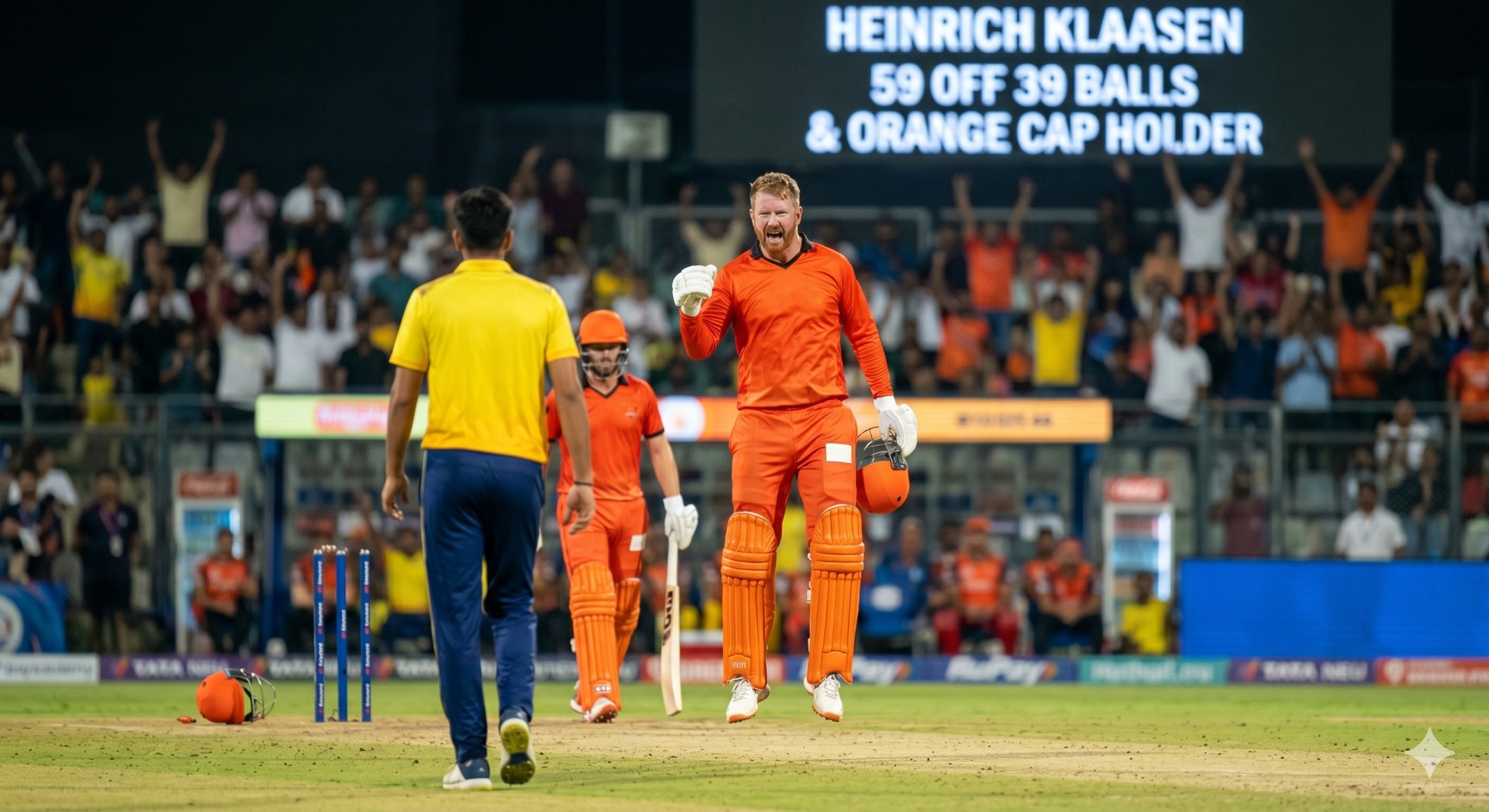
Heinrich Klaasen 59 off 39 & Orange Cap vs CSK
ipl 2026

Heinrich Klaasen 59 off 39 & Orange Cap vs CSK

Heinrich Klaasen scored 59 off 39 balls (SR 151.28) to revive SRH innings after a top-order blitz vs CSK in IPL 2026 Match 27. Klaasen leads Orange Cap race as IPL 2026's top run-scorerThe tactical fallout of Heinrich Klaasen’s dismissal by Anshul Kamboj was not just a blow to the scoreboard; it was a fundamental collapse of the Sunrisers Hyderabad’s middle-order geometry. For much of the 2026 season, Hyderabad has operated on a high-risk, high-reward philosophy where their top-heavy lineup looks to kill the game within the first fifteen overs. However, when Kamboj removed Klaasen in the seventeenth over, he exposed a lack of situational awareness in the SRH tail.The Orange Cap NarrativeKlaasen isn't just leading the Orange Cap race; he is reinventing the role of a T20 anchor. In an era where "intent" often leads to reckless dismissals, Klaasen’s ability to assess the bounce and outfield speed before shifting gears is what separates him from the pack. By the time he was dismissed by Anshul Kamboj in the 17th over, he had already built the "gravity" needed to demoralize the CSK bowling attack, forcing them into defensive field placements that opened gaps for SRH's domestic core.Match 27 Performance: Heinrich KlaasenMetricStatsRuns59Balls Faced39Strike Rate151.28Boundaries6 Fours, 2 SixesSeason StatusOrange Cap HolderKlaasen isn't just leading the Orange Cap race; he is reinventing the role of a T20 anchor. In an era where "intent" often leads to reckless dismissals, Klaasen’s ability to assess the bounce and outfield speed before shifting gears is what separates him from the pack. By the time he was dismissed by Anshul Kamboj in the 17th over, he had already built the "gravity" needed to demoralize the CSK bowling attack, forcing them into defensive field placements that opened gaps for SRH's domestic core.The younger batters, seemingly caught between trying to honor Klaasen’s aggressive legacy and the need to preserve wickets, looked completely out of depth against the seasoned discipline of the Chennai Super Kings. This loss of 20 to 30 potential runs proved to be the literal margin of difference, as a stadium that was ready to celebrate a record total was left contemplating a stuttering finish that gave the visitors all the psychological momentum heading into the chase.From a journalistic standpoint, Anshul Kamboj has transformed himself into the ultimate "Impact Player" without needing the official substitution tag. His ability to read Klaasen’s bat speed and adjust his line to a tighter, more cramped trajectory showed a level of bowling IQ that is rare in domestic circuits. By the time the final over of the Hyderabad innings concluded, the narrative of "SRH Dominance" had been completely rewritten by Kamboj’s three-wicket haul.This performance has massive implications for the IPL 2026 points table, as Chennai has managed to find a domestic bowling hero who can handle the pressure of a flat Hyderabad deck. As the tournament moves into the heat of the mid-season, the "Kamboj Blueprint"—patience, variation, and big-wicket hunting—will likely become the standard for any side looking to neutralize the terrifying power of the Sunrisers' middle order.The match serves as a stark reminder that while the IPL is often marketed as a batter’s paradise, the actual outcome is still dictated by the bowlers who can remain calm when the ball is flying into the stands. Kamboj walked away as the hero, but the lesson for Hyderabad is far more sobering: without a secondary anchor to support Klaasen during a collapse, even the most explosive starts can lead to disappointing finishes. For the readers of CricDesi, the takeaway is simple: in the 2026 season, the game isn't over until the death overs are negotiated, and as Kamboj proved tonight, a single ball can silence a city and save a season.The tactical brilliance of Heinrich Klaasen’s 2026 campaign is found in his refusal to be categorized as a one-dimensional "power-hitter." In the modern T20 era, many middle-order specialists fall into the trap of premeditated aggression, often throwing their wickets away in an attempt to maintain a high strike rate. Klaasen, however, operates with a cerebral understanding of the game’s geometry. Against the Chennai Super Kings, he spent the first ten balls of his innings assessing the bounce of the Hyderabad deck and the speed of the outfield.This period of "active waiting" allowed him to identify that the spinners were getting more purchase than expected, leading him to pivot from his usual lofted drives to a more disciplined sweep-and-nudge approach. This level of professional maturity is what separates the Orange Cap holders from the rest of the pack; Klaasen knows that on a flat deck, a well-placed double is sometimes as valuable as a risky boundary.Furthermore, Klaasen’s dominance has created a "gravity" effect on the field that benefits the entire Sunrisers Hyderabad batting lineup. When a player is striking at over 150 with the consistency he has shown throughout this season, the opposition captain is forced to move fielders into defensive positions, opening up gaps for the other batters. This was evident during the middle-over partnerships where Klaasen’s presence allowed the younger Indian domestic players to find boundaries they otherwise wouldn't have attempted.For a journalist, watching the body language of the CSK bowlers was telling; there was a visible sense of hesitation whenever Klaasen stepped across his stumps. His 59-run contribution was the anchor that kept the SRH ship steady through the turbulent middle overs, ensuring that the 194-run total was a mountain too high for Chennai to climb in the second innings.Ultimately, the narrative of the 2026 IPL is becoming a study in Klaasen’s technical evolution. He has mastered the art of "heavy" hitting, where the ball doesn't just clear the ropes but stays hit, demoralizing the bowler in the process. As the leading run-scorer in the tournament, he is no longer just playing for Sunrisers; he is setting a new benchmark for middle-order batting globally.For the readers of CricDesi, the takeaway from Match 27 is that while flashy opening stands get the initial cheers, it is the gritty, half-century-plus innings from a world-class anchor like Klaasen that wins championships. As long as the Orange Cap sits on his head, Sunrisers Hyderabad will remain the most dangerous offensive unit in the league, capable of setting or chasing any target with clinical, South African efficiency.Founder's Question: If an opposition team manages to dismiss Klaasen before the 15th over, does Sunrisers Hyderabad have a "Plan B," or are they just a top-heavy giant waiting to be toppled in the playoffs?

Apr 19, 2026 Harshvardhan Singh Gaur
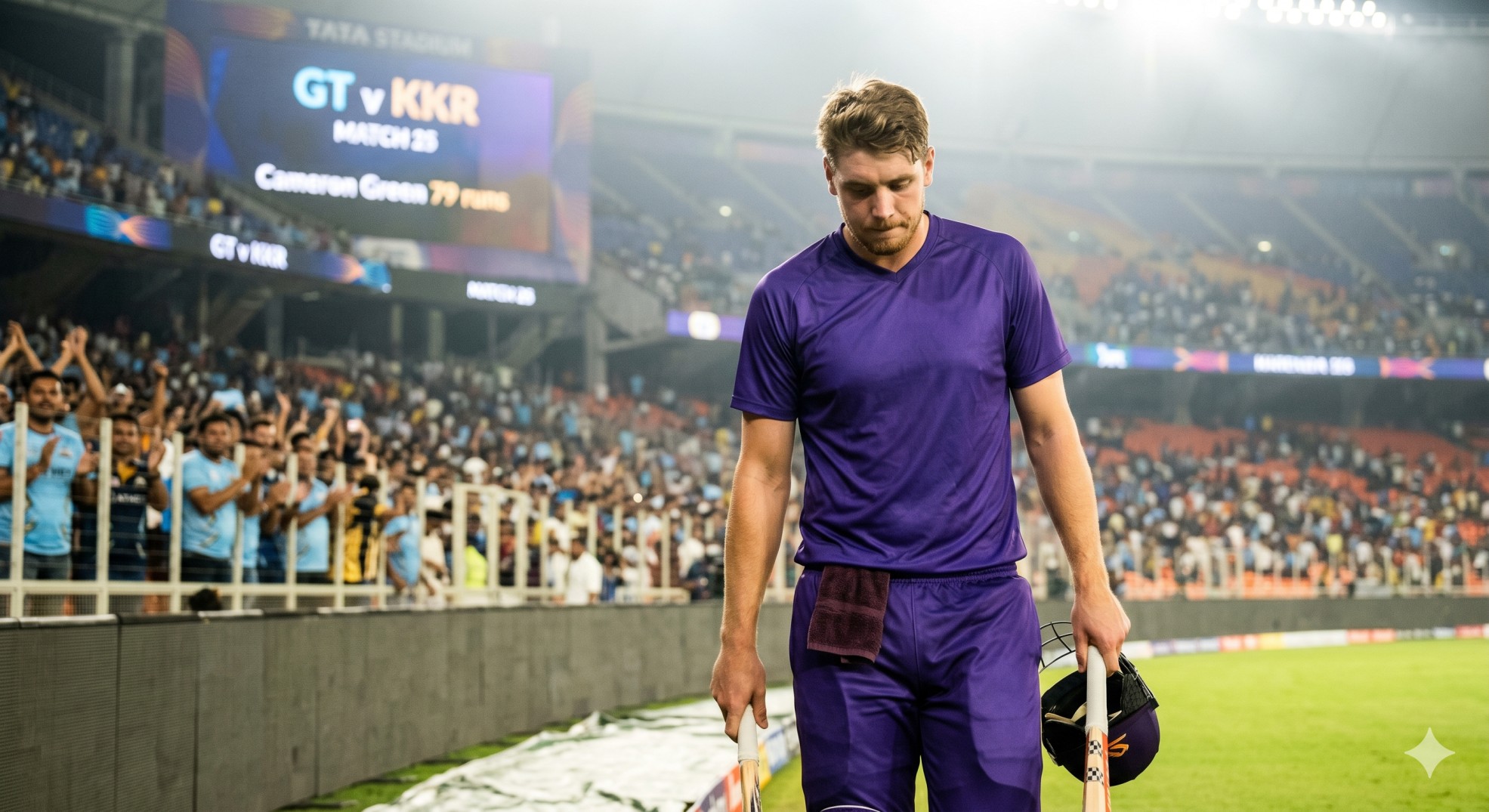
Cameron Green 79 in Vain: KKR Post 180 vs GT IPL 2026 Match 25
ipl 2026

Cameron Green 79 in Vain: KKR Post 180 vs GT IPL 2026 Match 25

Cameron Green smashed 79 off 55 vs GT at Narendra Modi Stadium, but KKR collapsed to 180. Rashid Khan dismissed Green via Jos Buttler catch.The clash at the Narendra Modi Stadium between the Kolkata Knight Riders and the Gujarat Titans. The evening began on a disastrous note for KKR as the experienced Ajinkya Rahane walked to the crease only to be sent back on the very first delivery he faced. Mohammed Siraj, steaming in with pace and precision, produced a peach of a delivery that left Rahane with no answers, marking a golden duck that immediately put the visitors on the back foot.This early blow set a grim tone for the power play, where KKR’s top order looked completely out of depth. The pressure was mounting rapidly, and it seemed as though the match might slip away before the first ten overs were even completed.Green was playing a different game than the rest of his team. When he took Rashid Khan for 16 in an over, for a second, it felt like KKR might actually pull off a miracle. He actually took Rashid Khan to the cleaners for 16 in an over—something you rarely see. But the "Rashid Magic" eventually won out. In the final over, Rashid baited Green into a false stroke, and Jos Buttler did the rest.Rashid is a legend for a reason. He didn't panic after getting hit; he just slowed it down, dangled the bait, and waited for Green to sky one. Once Buttler took that catch, the lights went out for KKR.180 at Ahmedabad is like bringing a knife to a gunfight, especially with the dew coming in. KKR’s tail-enders were swinging at shadows. If you don't have a second finisher to help Green, you don't win in this league.However, the game of cat and mouse between pace and spin eventually tilted back in favour of the master craftsman from Afghanistan. Rashid Khan, showing why he is regarded as a T20 legend. The dismissal was clinical, as a sharp catch by the ever-reliable Jos Buttler ended Green’s stay and sparked a predictable but painful collapse for the KKR middle and lower order. Once Green was removed from the equation, the lack of depth in the batting lineup was laid bare for all to see. The Knight Riders completely lost their way in the final five overs, managing to scrape together only 30 runs as the Gujarat Titans' death bowling tightened the noose.This late-inning stagnation meant KKR finished on 180, a score that felt significantly below par on a ground known for high-scoring chases and a lightning-fast outfield. While 180 might seem respectable in isolation, the context of the Narendra Modi Stadium and the presence of dew in the second innings suggests that the bowlers will have a mountain to climb.The Kolkata franchise has developed a worrying habit of failing to finish strongly, and yesterday was perhaps the most glaring example of a top-heavy innings being wasted. Without a second batter to support Green’s monumental effort, the total was left looking vulnerable against a Shubman Gill-led GT side that thrives on home soil.As the chase began under the bright Ahmedabad lights, the tactical blunders of the first innings started to weigh heavily on the KKR camp. Defending 181 against a balanced batting lineup like Gujarat’s requires early wickets and disciplined lines, but the psychological blow of losing their set batter at a crucial juncture seemed to have drained the energy from the squad.The stadium, a fortress for the Titans, became a cauldron of noise as the home fans sensed a comfortable victory. For KKR, the night was a stark reminder that individual brilliance, no matter how spectacular, can rarely overcome a systematic failure across the team’s core departments. The long night ahead in Ahmedabad was destined to be a test of their bowling resilience and tactical flexibility.The strategic battle between Cameron Green’s brute force and Rashid Khan’s tactical wizardry served as the emotional heartbeat of the entire first innings. Green’s ability to stand tall amidst the ruins of a top-order collapse demonstrated a level of maturity that KKR have been missing in their overseas recruitment. By picking Rashid’s variations and targeting the shorter boundaries, he forced the Titans into defensive fields they rarely have to employ at home.However, the turning point remained that crucial moment in the 17th over when Rashid’s experience finally outshone Green’s aggression. The delivery that took the edge was a subtle variation in pace that proved even the most in-form batter can be undone by a single lapse in concentration.This dismissal triggered a ripple effect through the lower order, exposing a lack of power-hitting depth that ultimately doomed KKR's chances of reaching a 200-plus score. The final five overs were a masterclass in death bowling by the Titans, who utilised wide yorkers and slower bouncers to perfection, leaving the KKR tail-enders swinging at shadows.On a ground where the dew factor historically aids the chasing side, every run not scored during that final collapse felt like two runs gifted to Shubman Gill’s men. KKR’s inability to capitalize on the platform Green had built transformed a potentially winning position into a desperate defensive struggle, highlighting the urgent need for a secondary finisher to step up when the primary star falls.Looking back at the stats, Cameron Green’s 79-run knock will likely remain KKR's highest individual score of the season for some time. The fact that the next highest contribution was so far behind highlights the glaring gap in their current batting order. If KKR wants to compete for the playoffs in IPL 2026, they cannot afford to let their power play and death overs be so unproductive.Unless the management addresses the technical flaws in their domestic core and provides better support for their overseas stars, nights like these at the Narendra Modi Stadium will continue to end in heartbreak rather than celebration.My take: Rahane’s captaincy is on thin ice. If he can't contribute with the bat, KKR needs to look at Green or Rinku to lead. We can't keep wasting 79-run masterclasses from our overseas stars.

Apr 17, 2026 Harshvardhan Singh Gaur
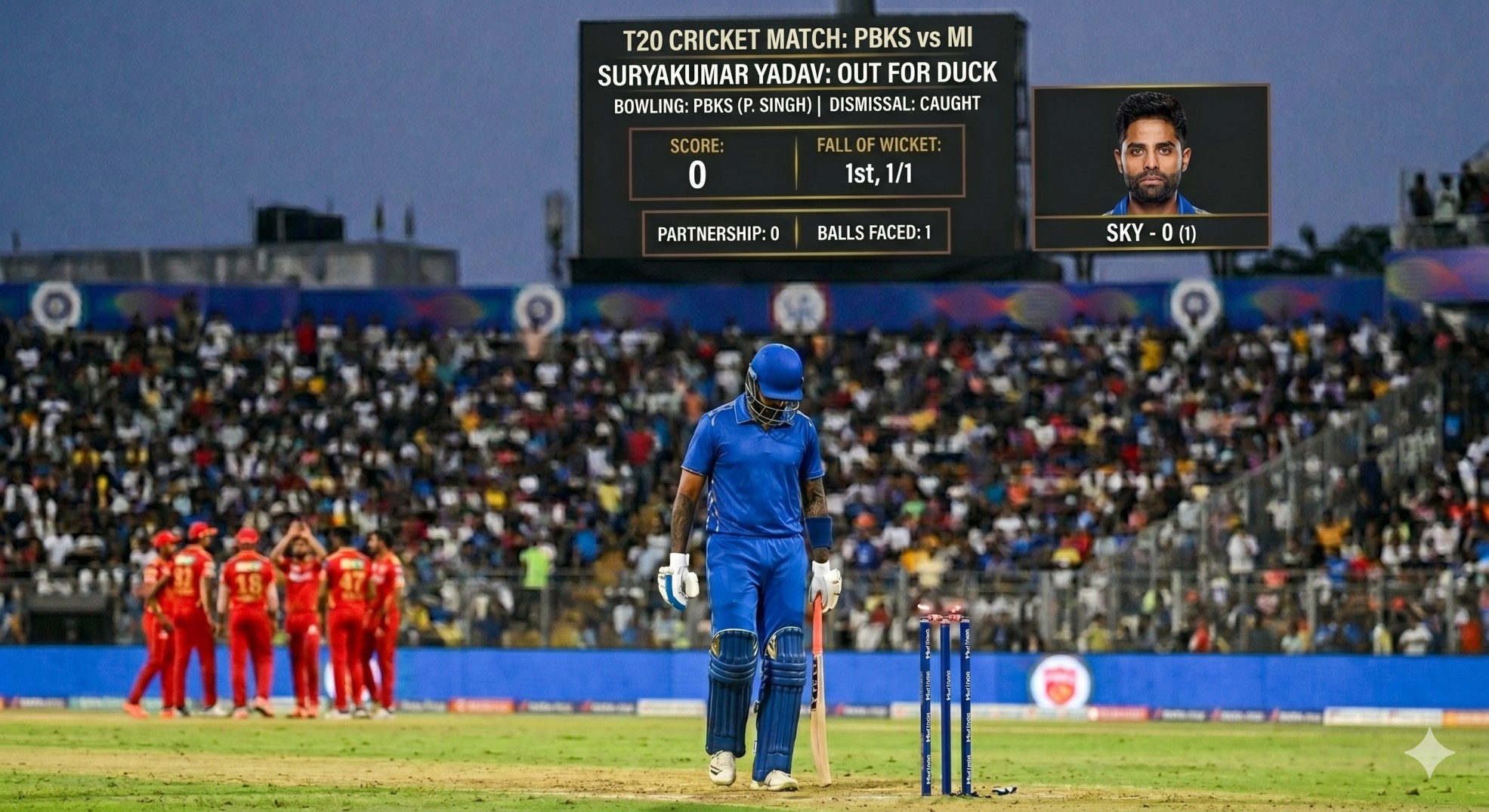
Suryakumar Yadav Out for Duck vs PBKS at Wankhede IPL 2026
ipl 2026

Suryakumar Yadav Out for Duck vs PBKS at Wankhede IPL 2026

Suryakumar Yadav dismissed for duck by Arshdeep Singh vs Punjab Kings at Wankhede.The atmosphere at the Wankhede Stadium was electric as the Mumbai Indians took the field, with the home crowd eagerly anticipating a masterclass from their local hero, Suryakumar Yadav. You could hear a pin drop at Wankhede when SKY started walking back. It's becoming a depressing routine. Facing a fired-up Arshdeep Singh, Suryakumar looked uncharacteristically tentative. The delivery was a perfect exhibition of left-arm pace bowling, angled across the right-hander with just enough zip to induce a mistake.In an attempt to guide the ball toward the vacant third-man region, Suryakumar only managed a thick outside edge that flew straight into the hands of the fielder at short third man. This golden duck was more than just a momentary failure.Arshdeep Singh set the perfect trap. He bowled a nagging line angled across the right-hander with enough zip to force a mistake. Instead of his usual authoritative stroke play, Surya looked tentative, offering a thick outside edge straight to short third man.It wasn’t just a bad ball; it was a technical failure. His feet looked stuck, and he lacked the spatial awareness to adjust his wrists mid-stroke—a move that used to be his trademark. Analysts have clearly found a blueprint to exploit him: stay wide, use a specialized short third man, and wait for the frustrated player.The statistical decline of India's premier T20 batter has become the primary talking point of the tournament, especially considering his stature as a world-class finisher. After five matches, Suryakumar has managed a meager total of only 106 runs, a figure that is baffling for a player of his caliber. His inability to find his rhythm at his home ground, often referred to as his "backyard," suggests a deeper issue with his timing and shot selection.Throughout this season, we have seen him get out to deliveries he would usually dispatch for six with his eyes closed. The confidence that once defined his "Mr. 360" persona seems to have flickered out, replaced by a desperate urge to find boundaries early in his innings. This desperation was evident in yesterday's dismissal, where he attempted a risky steer against a moving ball instead of taking the time to settle his nerves.This dismissal wasn’t just about one ball. It was part of a bigger pattern. Across five matches, Suryakumar Yadav has managed only 106 runs. For a player of his caliber, these numbers are far below expectations. This is a batter who can change games in a matter of overs, who can dismantle bowling attacks with his range of shots. But right now, he is struggling.The stats are becoming impossible to ignore. After five matches, Surya has managed just 106 runs. At his home ground—his "backyard"—he is getting out to deliveries he would usually flick for six with his eyes closed. There’s a visible desperation to find boundaries early in his innings rather than settling in, which was exactly what caused his downfall against Punjab.Mumbai Indians' management faced a difficult tactical decision following this early exit, eventually opting to use the Impact Sub rule to replace the captain later in the game. This move highlighted the team's shift toward damage control as they tried to find a way back into the match without their main scoring engine. For the fans, seeing their captain substituted out after a first-ball duck was a bitter pill to swallow. It raised uncomfortable questions about the weight of captaincy and whether the additional responsibility is affecting his natural flair.When a player as dominant as Suryakumar enters a slump, it creates a vacuum in the middle order that even high-quality players like Tilak Varma struggle to fill. The lack of a "SKY show" meant that Mumbai missed out on those crucial 20–30 extra runs that often turn a competitive total into a winning one on the flat Wankhede deck.Looking ahead, the road to redemption for Suryakumar Yadav requires a return to the basics of his batting philosophy. He remains a player of immense talent, and the history of the IPL is filled with legends who have struggled in the first half of a season only to dominate the latter stages. However, the pressure is mounting as the Mumbai Indians continue their winless streak The team needs its leader not just to guide them strategically but also to lead by example with the bat. The cricketing world knows that one good inning can flip the switch for a player like him, but until that happens, the scrutiny will only intensify. For your blog readers, the big question remains whether this is just a temporary dip in form or a sign that the relentless schedule of international cricket has finally caught up with India’s T20 superstar.This slump is creating a massive void in the MI middle order. With the anchor gone for zero, youngsters like Tilak Varma and Naman Dhir are forced into a "safety-first" mindset, which goes against everything this franchise stands for. MI’s management even used the Impact Sub to swap out the captain later in the game—a move that felt like damage control. It raises the inevitable question:For the Mumbai Indians to turn this around, they don't just need a captain; they need the fearless batter who dominates 360 degrees. Whether it’s moving down the order to avoid the swinging ball or a tactical "mental refresh," something has to change. The margin for error in IPL 2026 has vanished, and MI's playoff hopes are currently pinned on their leader finding his hands again.

Apr 17, 2026 Harshvardhan Singh Gaur
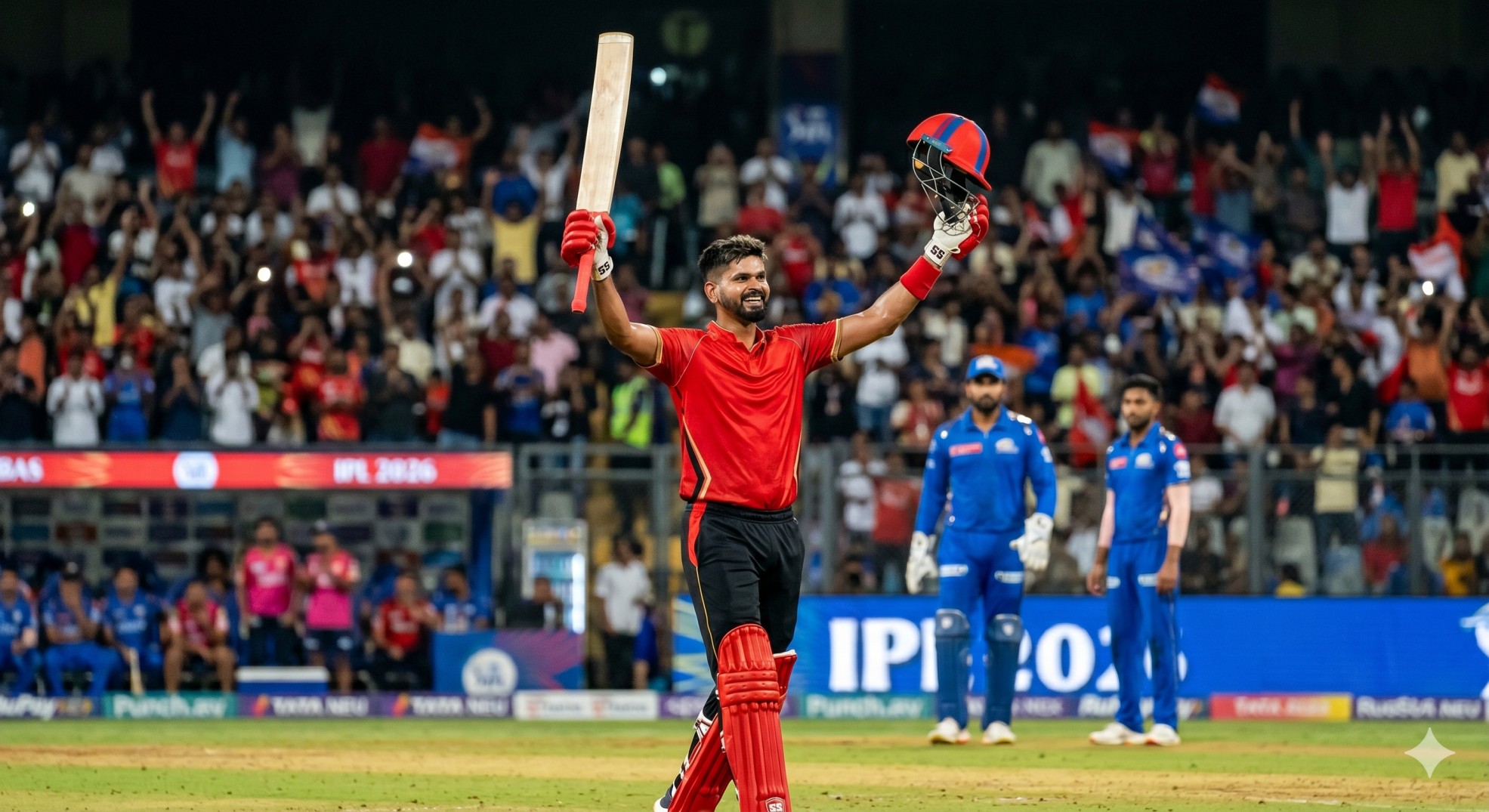
 Shreyas Iyer 66* vs MI: PBKS Skipper Shines with Third Consecutive Fifty in IPL 2026
ipl 2026

Shreyas Iyer 66* vs MI: PBKS Skipper Shines with Third Consecutive Fifty in IPL 2026

Shreyas Iyer Hattrick of Fifties: Unbeaten Captain, 7-0 vs MI Since 2020! Shreyas Iyer once again proved why he is one of the most composed captains in IPL 2026, delivering an unbeaten 66 off 35 balls that felt less like an innings and more like a masterclass in control. Facing the Mumbai Indians at Wankhede is never easy, especially when the opposition has already posted a strong total, and the crowd is fully behind them. But Iyer walked in with clarity, with purpose, and most importantly, with belief.The start of his innings was measured. No rush, no unnecessary aggression. He took a couple of deliveries to understand the pitch and to read the bowlers and then quietly began building his innings. A gentle push into the covers for a single, a flick off the pads for two—small contributions, but important in settling the chase. But it didn’t take long for him to shift gears. A slightly overpitched delivery was driven cleanly through extra cover for four, and suddenly, you could see the intent.As the innings progressed, Iyer began to dictate terms. One particular moment stood out—he rocked back and pulled it effortlessly over midwicket for six. The crowd reacted instantly, but so did the fielding team. Fielders moved deeper, angles changed, and suddenly the pressure shifted.And this is where Iyer’s game stands out. He doesn’t just play shots—he reads the game. Every boundary he hits forces a reaction from the opposition, and he uses that to his advantage. When the field spreads, he takes singles. When the bowler tries something different, he adjusts. It’s a constant battle of awareness, and more often than not, Iyer comes out on top.At the other end, wickets could have created pressure, but Iyer made sure that never happened. He kept the scoreboard moving, rotated strike consistently, and didn’t allow dot balls to build tension. In one over, after two quiet deliveries, he stepped out and lofted the ball straight down the ground for four. Not a risky shot—just perfectly executed.As he crossed his half-century—his third consecutive fifty of the season—the reaction was more of appreciation than surprise. Because this is becoming a pattern now. Match after match, Iyer is delivering. Match after match, he is leading from the front.His unbeaten 66 off 35 balls included five boundaries and four sixes, but numbers don’t fully capture the impact. It was the timing of those runs, the way he controlled phases, and the calmness he brought to the chase that made the difference. At no point did the game feel out of reach while he was at the crease.For the Punjab Kings, this innings was another step in what has been a perfect season so far. Five matches, five wins, and a captain who is in complete control of his game. The confidence within the team is visible, the clarity in their approach is evident, and performances like this only strengthen their position.There’s also a bigger narrative building here. Since 2020, Iyer has maintained an incredible record against the Mumbai Indians, continuing to dominate this rivalry. And with this innings, that record only gets stronger.For the Mumbai Indians, this was a tough lesson. They had moments in the game; they showed fight, but they couldn’t find a way to break through when it mattered most. And against a batter like Iyer, if you don’t create that one breakthrough moment, he will take the game away from you. And that’s exactly what happened.As the innings moved towards the finish, there was no drama, no late twist. Just calm execution. A single here, a boundary there, and the game was done. Iyer remained unbeaten, walking off with the job finished, the chase completed, and another win secured for his team.When the situation demands clarity and composure, players like Shreyas Iyer don’t just rise—they take control. And right now, in IPL 2026, he is not just leading Punjab Kings. He is defining them.But instead of allowing that to happen, Iyer picked his moment. Bumrah tried to slow things down with back-to-back variations, and then came that one slightly overpitched delivery—Iyer stepped forward and launched it straight over long-off for six.That one shot didn’t just add six runs—it broke the rhythm MI was trying to build. Suddenly, the field spread again, bowlers started searching for answers, and control returned to the Punjab Kings.Another small but crucial detail in his innings was his running between the wickets. It may not grab headlines, but those quick singles and those sharp twos kept the scoreboard ticking and ensured that no over went completely silent. It’s these little things that separate a good innings from a match-winning one.And perhaps the most telling part of Shreyas Iyer’s innings was how calm everything looked from the outside, even when the stakes were high. There was no visible tension, no rushed decisions, no desperate swings. Just a batter completely in sync with the situation. When a bowler tried to push him back with a short delivery, he simply leaned into it and guided it behind point for four. No aggression in the body language, just quiet confidence.For the Punjab Kings, this is exactly what they needed from their captain, Shreyas Iyer.Shreyas Iyer stayed unbeaten, finishing what he started. That’s the hallmark of a true leader—not just setting the tone, but closing the game. And right now, with three consecutive fifties, he is not just in form.He is in control of the tournament itself.

Apr 16, 2026 Harshvardhan Singh Gaur
Naman Dhir 50 Save Mumbai at Wankhede ? IPL 2026
ipl 2026

Naman Dhir 50 Save Mumbai at Wankhede ? IPL 2026

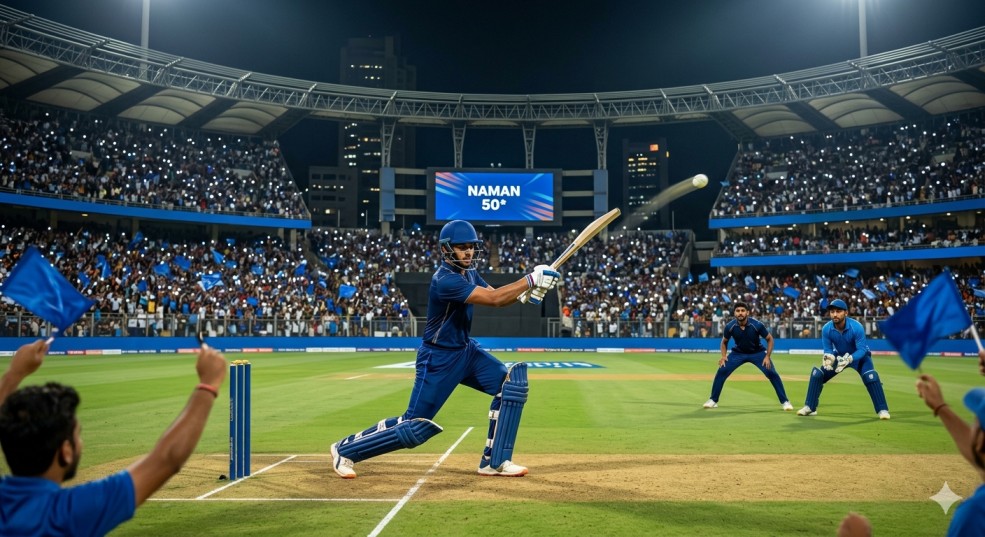
Naman Dhir 50 — Dismissed by Shashank Singh off Xavier Bartlett.When the Mumbai Indians were struggling at 48/2 at the Wankhede Stadium, the narrative around the match felt almost settled. The early wickets had exposed a fragile start, and against an unbeaten Punjab Kings side, it looked like Mumbai was heading toward another disappointing outing. The crowd had gone quiet, the energy had dipped, and the pressure was clearly building with every passing delivery. But in moments like these, cricket often reveals unexpected heroes. While Quinton de Kock took control of the innings with authority, another innings quietly shaped the backbone of Mumbai’s recovery—Naman Dhir’s composed and crucial fifty.Naman Dhir’s innings did not begin with fireworks. It began with awareness. With wickets already down, the situation demanded calmness rather than aggression. He understood that this was not the time to play high-risk shots or chase boundaries early. Instead, he focused on building the innings step by step. A soft push into the off-side for a single, a quick run between the wickets, and then another controlled stroke into the gap—these were the small contributions that started to stabilize Mumbai’s innings. While de Kock began to shift gears, Naman ensured that the foundation remained solid.At one stage, when the scoring rate threatened to slow down, Naman responded with intent. A slightly short delivery was pulled confidently through midwicket for a boundary, followed by a crisp drive through covers that raced to the fence. These were not reckless shots—they were calculated responses to the situation. He was not trying to dominate the bowlers, but he was certainly not allowing them to settle either. This balance between control and aggression became the defining feature of his innings.The partnership between Naman Dhir and Quinton de Kock began to grow steadily, and with it, the momentum of the game started to shift. What initially looked like a recovery phase slowly turned into a position of strength. De Kock took on the responsibility of attacking, while Naman rotated the strike efficiently, ensuring that the scoreboard kept moving. This partnership was not built on one player dominating—it was built on understanding and complementing each other’s roles.As the innings progressed, Naman reached his half-century, a milestone that reflected both his patience and his contribution to the team’s turnaround. The crowd, which had earlier fallen silent, now responded with appreciation. It was not the loudest celebration of the night, but it was one of the most meaningful. Because everyone in the stadium understood the value of that innings.However, just when it seemed like Naman would carry his innings even further, the breakthrough finally came for Punjab Kings. In an attempt to accelerate, he went after a delivery from Xavier Bartlett, looking to find the boundary once again. The shot had intent, but not the perfect connection. The ball went high, and Shashank Singh positioned himself perfectly to complete the catch. The innings came to an end.Naman Dhir walked back after scoring 50, but his job was already done. He had played his role to perfection. He had absorbed the pressure, supported his partner, and helped transform a difficult situation into a strong position for the Mumbai Indians. His dismissal did not take away from the impact of his innings; if anything, it highlighted how important his contribution had been.For the Punjab Kings, that wicket was a relief. Breaking that partnership was essential, and they finally managed to do it. But by then, the damage had already been done. The momentum had shifted, and the Mumbai Indians were firmly back in control of the game.This innings from Naman Dhir may not dominate headlines the way a century does, but it will be remembered as one of the defining contributions of the match. In T20 cricket, not every impactful innings comes with big numbers or explosive shots. Sometimes, it is the composed, intelligent, and situation-aware innings that make the biggest difference.A knock shaped by awareness. And a performance that reminded everyone why the Mumbai Indians can never be written off, no matter the situation. It is not just about who scores the most runs. It is about who steps up when the team needs it the most.It’s easy to play freely when the scoreboard is healthy, when the pressure is low, and when the game is already in control. But walking in at 48/2, with the team struggling and expectations rising, is a completely different challenge. That’s where temperament gets tested. And Naman passed that test with maturity far beyond his experience.There was a phase where the bowlers tightened things up again. A couple of dot balls, a well-directed yorker, and suddenly the scoring slowed. In that moment, instead of forcing a big shot, Naman calmly stepped out on the next delivery and chipped it gently over mid-on for a boundary. Not a power shot, not a risky swing—just smart placement.Moments like these don’t always grab attention, but they quietly change the flow of the game. They release tension, they shift the field, and they allow the batting side to breathe again. And that’s exactly what Naman kept doing throughout his innings.Even after his dismissal, the impact of his knock stayed with the Mumbai Indians. The platform was set, the momentum had shifted, and the pressure had moved back onto the Punjab Kings. That’s the sign of a truly valuable innings—it continues to influence the game even after the batter has walked back.

Apr 16, 2026 Harshvardhan Singh Gaur
Virat Kohli 49(34) vs LSG: Impact Player Masterclass at Chinnaswamy | IPL 2026
ipl 2026

Virat Kohli 49(34) vs LSG: Impact Player Masterclass at Chinnaswamy | IPL 2026

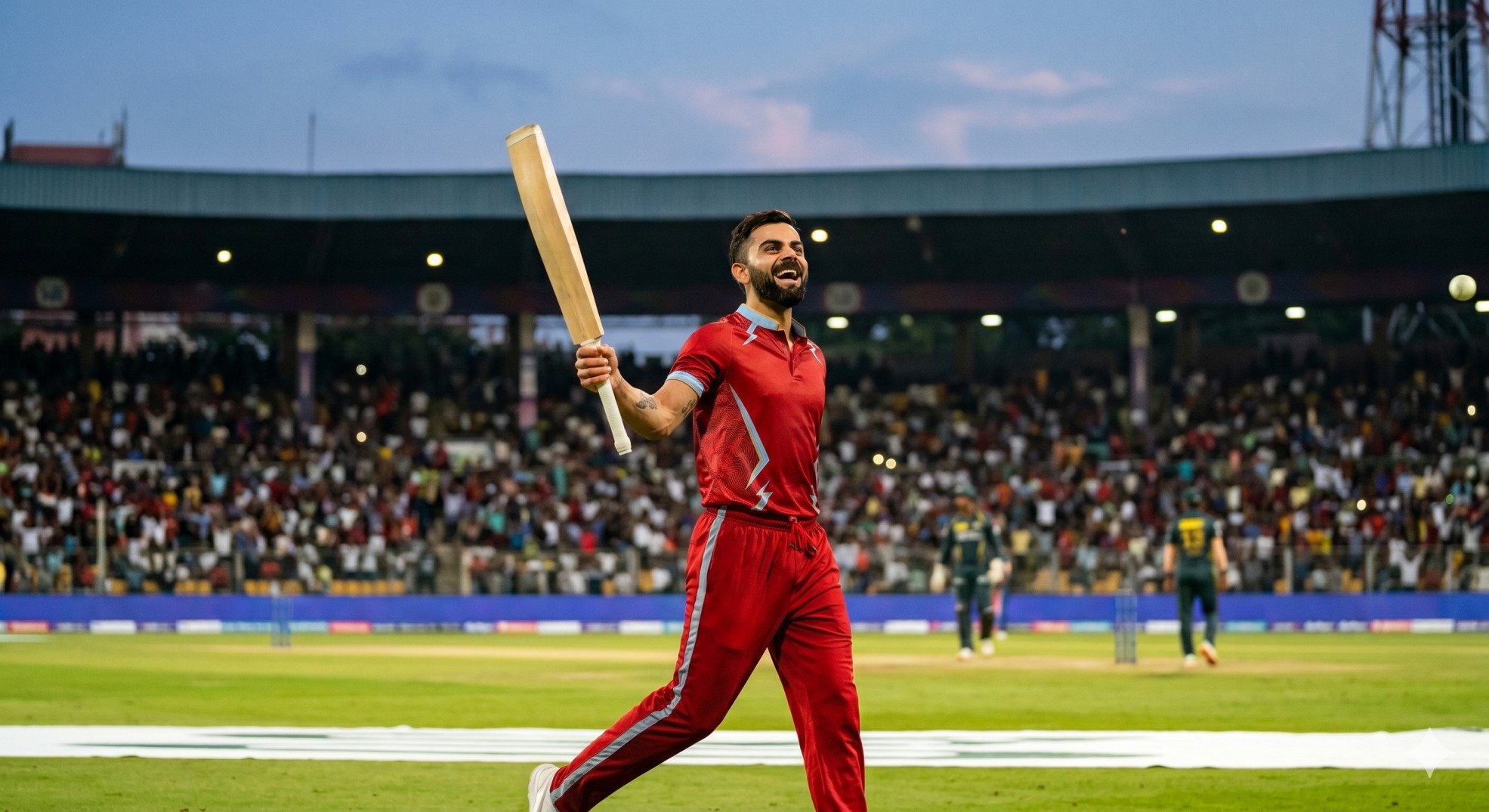
Virat Kohli shines as an impact player for RCB vs. LSG in IPL 2026.Virat Kohli didnot play due to injury, but he made his presence felt with the bat as an impact player. And chasing a target against the Lucknow Super Giants is never straightforward, especially at a venue like Chinnaswamy, where the game can swing in just a few deliveries, but Kohli turned it into something that looked almost routine. His 49 off 34 balls was not just another inning—it was a calculated, composed, and highly effective knock that ensured Royal Challengers Bengaluru stayed in complete control throughout the chase.Kohli hit a massive pull-shot off Digvesh Rathi and six boundaries at a strike rate of over 144. Right from the moment he took guard, there was no sign of hesitation. No visible discomfort from the injury, no rush to dominate, just a clear plan. The first few deliveries were about reading the pitch, understanding the pace, and settling into the innings. Then, he effortlessly transitioned to a higher gear. A slightly overpitched delivery was driven through covers with that trademark elegance, the kind of shot that doesn’t just fetch runs but sends a message. A short ball followed, and Kohli pulled it confidently, placing it perfectly between fielders.At one stage, when RCB needed to ensure they didn’t lose momentum in the middle phase, Kohli took complete responsibility. Instead of going for risky shots, he focused on strike rotation. Singles, quick twos, the occasional boundary—he built the chase brick by brick. And that’s where his experience stood out. While other players might have tried to finish the game quickly, Kohli made sure there were no unnecessary risks.The partnership he built with Devdutt Padikkal during that phase quietly killed the contest. LSG bowlers like Shami, Digvesh, and Avesh tried to find a way back, mixing their lengths, changing angles, and even attempting variations in pace, but nothing seemed to disturb Kohli’s rhythm. He read everything early, adjusted effortlessly, and kept the scoreboard moving. One particular moment summed up his innings perfectly—a length ball just outside off, and Kohli, with minimal foot movement, guided it past point for a four.The chase was under control, the required rate had dropped significantly, and RCB was cruising. His role as an impact player was exactly that—impactful. Despite not contributing in the field due to injury, he influenced the outcome of the match in the most crucial department.Kohli's form, especially in T20 cricket, continues to evolve. He is a player who understands tempo, adapts to situations, and plays according to the demands of the game.Something more valuable. An innings built on control, awareness, and experience. This innings serves as a prime illustration of effective chasing in T20 cricket. And once again, Virat Kohli showed why he remains one of the most reliable match-winners in the league, even when not fully fit.This was not a high-risk chase where boundaries were the only option; it was a chase that demanded control, patience, and smart decision-making. Kohli read that perfectly. There was a phase in the innings where RCB needed just under a run-a-ball more than the current rate, and instead of forcing big shots, he calmly collected singles and turned ones into twos. That quiet phase, often ignored in highlights, is where the match was truly won.Because while the scoreboard kept ticking, the pressure slowly shifted back onto Lucknow Super Giants. Bowlers started searching for wickets instead of building pressure, fielders moved deeper, and suddenly the gaps opened up. Kohli didn’t miss those opportunities. Kohli made a gentle push into the covers for two, followed by a flick behind square for four, and just like that, the required rate dropped again.Another key moment came when Prince Yadav was introduced and tried to break the partnership. First ball—defended. Second ball—driven for a single. Third ball—a slightly short delivery, and Kohli rocked back to cut it through point for four. No wild swing, no unnecessary risk. Just timing.Even his body language told the story. He was an impact player due to injury, but once he was at the crease, he showed no signs of discomfort. He ran vigorously between the wickets, communicated effectively with his partner, and maintained a laser-like focus on completing the task.He remained composed, trusted the process, and ensured that he took every run with clarity. A soft push into the off-side for a single and a quick run to rotate strike, and suddenly the target felt closer with every delivery.Because many players in that situation would look for a boundary to finish things quickly, but Kohli chose control over chaos. He understood that the game was already in RCB’s hands, and all that was needed was calm execution. Even when he got out just one run short of his fifty, there was no disappointment on his face—only the satisfaction of having done his job.For Royal Challengers Bengaluru, this innings brings huge confidence. It shows that even when things are not ideal, even when a key player is not fully fit, they still can control a chase. And when Kohli is in this kind of form, anchoring the innings while maintaining tempo, RCB becomes a very difficult team to stop.For Lucknow Super Giants, the frustration was clear. They didn’t bowl badly, but they couldn’t create that one moment of breakthrough. And against a batter like Kohli, if you don’t create that moment early, he will take the game deeper and deeper until it’s out of reach. By the time he was dismissed for 49, the result was almost decided. The chase had been simplified, the pressure had disappeared, and RCB were cruising towards victory.

Apr 15, 2026 Harshvardhan Singh Gaur
Yashasvi Jaiswal IPL 2026: RR's Silent Force Targets SRH
ipl 2026

Yashasvi Jaiswal IPL 2026: RR's Silent Force Targets SRH

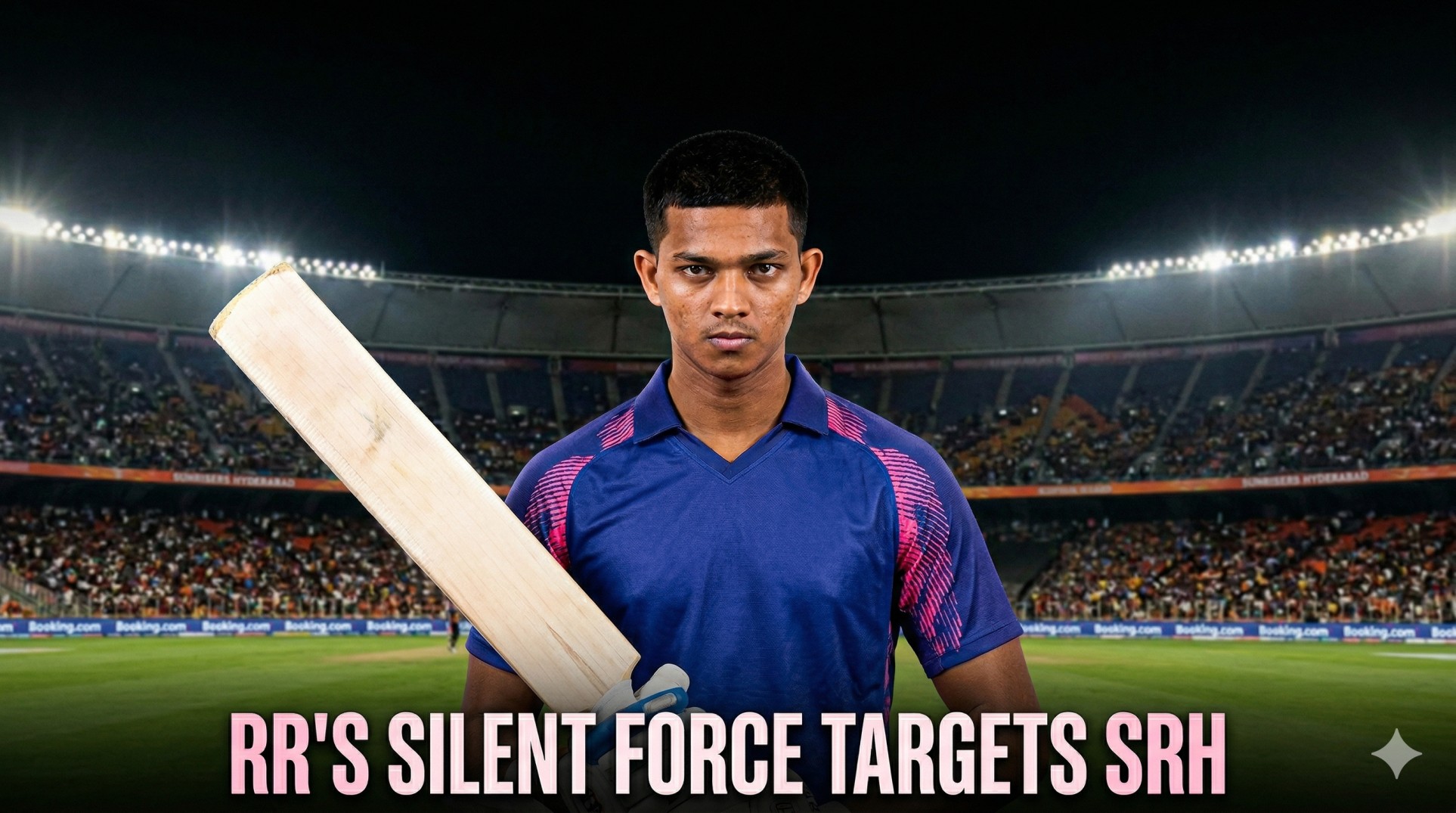
While everyone talks about Sooryavanshi, Jaiswal has quietly scored two fifties and is an Orange Cap holder. The silent assassin arrives at Hyderabad.They discuss the fireworks… but they forget the foundation.” When Yashasvi Jaiswal walks out to open for Rajasthan Royals in IPL 2026, there’s no noise, no over-the-top aggression, no rush to dominate from ball one. And yet, by the time the innings stabilize, he has already inflicted the damage. Quietly. Efficiently. Consistently. That’s what makes Jaiswal so dangerous this season. While others grab headlines with explosive cameos, he builds innings that win matches. Two fifties already this season, and yet, somehow, he’s still flying under the radar.“No noise. No rush. Just pure control.” And at the other end, when an aggressive partner like Sooryavanshi starts attacking, Jaiswal adapts. He rotates strikes, gives his partner the freedom, and ensures the scoreboard keeps moving. That’s the beauty of his game—he doesn’t need to dominate every over. He understands the flow of the innings.In one of RR’s previous matches, Jaiswal picked his moment in the fifth over when the run rate was slightly dipping. A spinner came in, trying to slow things down. First ball—defended. Second ball—single. But the third? He stepped out and lofted it straight down the ground for a six-run score. Clean. Controlled. Perfect timing.This season, his consistency has become one of RR’s biggest strengths. Every time he gets going, RR gets solid starts. And in T20 cricket, that matters more than anything. A successful opening partnership sets the tone. It allows the middle order to play freely. It gives the team control. And Jaiswal has been doing exactly that. “While others explode, Jaiswal builds the win.”His partnerships at the top have been crucial. Whether it’s rotating a strike early or accelerating at the right moment, he ensures there’s no collapse, no panic. That stability is what makes RR such a strong side this season.And tonight, against Sunrisers Hyderabad, his role becomes even more important. SRH have an aggressive bowling attack, and if they manage to pick early wickets, they can shift the game quickly. But if Jaiswal settles in, if he builds that opening stand, RR will once again take control. Because once he gets set, stopping him becomes difficult.And even in the final moments, Yashasvi Jaiswal doesn’t lose his shape or composure. With fielders spread and bowlers trying everything to restrict runs, he stays calm and sticks to his strengths. A full delivery outside off is gently guided past the point for a four. No power, just perfect timing. That’s his game. While others go for big, risky shots, Jaiswal keeps it simple and effective. And that’s why he continues to deliver for Rajasthan Royals—quietly, consistently, and with complete control over the situation.Earlier, he was known for his classical approach. Now, he’s added range. He can adapt. He can accelerate. He can finish. “No hesitation. No overthinking. Just smart batting.” And that’s why he’s becoming such a complete T20 player.For RR, having Jaiswal in form is a massive advantage. Because he doesn’t just score runs—he gives structure to the innings. He ensures there’s no early collapse. He builds partnerships. He also adapts his approach when necessary. That’s why his performance tonight is so important. If Jaiswal fires, RR will once again dominate. If he doesn’t, SRH gets a chance. Simple as that.And as the innings move deeper, the real value of Yashasvi Jaiswal’s approach becomes even more visible. When most teams look to accelerate and often lose wickets in the process, Jaiswal keeps things steady. Jaiswal takes a quick single to long-on, calmly scores two through midwicket, and then suddenly punishes a loose delivery with a crisp cut shot for four. No rush. No reckless hitting. Just calculated acceleration. That’s what separates him from the rest.There was a moment where RR needed to push harder. The bowler tried to go wide outside off, but Jaiswal anticipated it early, shuffled across, and carved a point for a boundary. The next ball, slightly fuller, was driven straight down the ground. Two shots, two boundaries, and just like that, the scoring rate jumped again. “This is pure timing… he’s making it look effortless.”What stands out is his game awareness. He knows when to hold back and when to attack. He doesn’t let the situation dictate panic—instead, he controls it. And that’s exactly why he has been so consistent this season. For Rajasthan Royals, this kind of reliability at the top is priceless. As the match begins, the focus may shift to the big hitters, the explosive players, the ones who capture attention. But quietly, at the other end, Jaiswal will be doing what he does best.And as the final overs approach, Yashasvi Jaiswal’s role becomes even more critical—not just as a run scorer, but as someone who carries the innings till the end. In the 16th over, with RR looking to push beyond a strong total, Jaiswal faced a tight over where the bowler executed three perfect yorkers. For a moment, it looked like the flow might break. But then came that one slight error—a length ball drifting into his pads—and Jaiswal didn’t miss it. A quick shuffle, a flick over square leg, and the ball sailed for a six. The crowd erupted. “That’s the release shot RR needed!”From there, he kept the tempo intact. A clever late cut in the next over, followed by a lofted drive over extra cover—two completely different strokes, both executed with precision. This is where Jaiswal stands apart. He doesn’t rely on brute force; he reads the field, understands the bowler, and picks his moments.For the Rajasthan Royals, this is exactly why his consistency is so valuable. He doesn’t just start well—he finishes strong. And in a format where one over can change everything, having someone who can control both the start and the finish is a huge advantage.If this season's history is any indication, don't be surprised if Jaiswal's quiet innings at the end of the match becomes the reason RR remains unbeaten. Because in cricket, it’s not always about the loudest performance. Occasionally, it’s about the smartest one. And right now, Yashasvi Jaiswal is doing exactly that.

Apr 13, 2026 Harshvardhan Singh Gaur