MENU
© 2026 CricDesi Media

Search: "RIZVI"

Results Found: 5

Category
Sort By
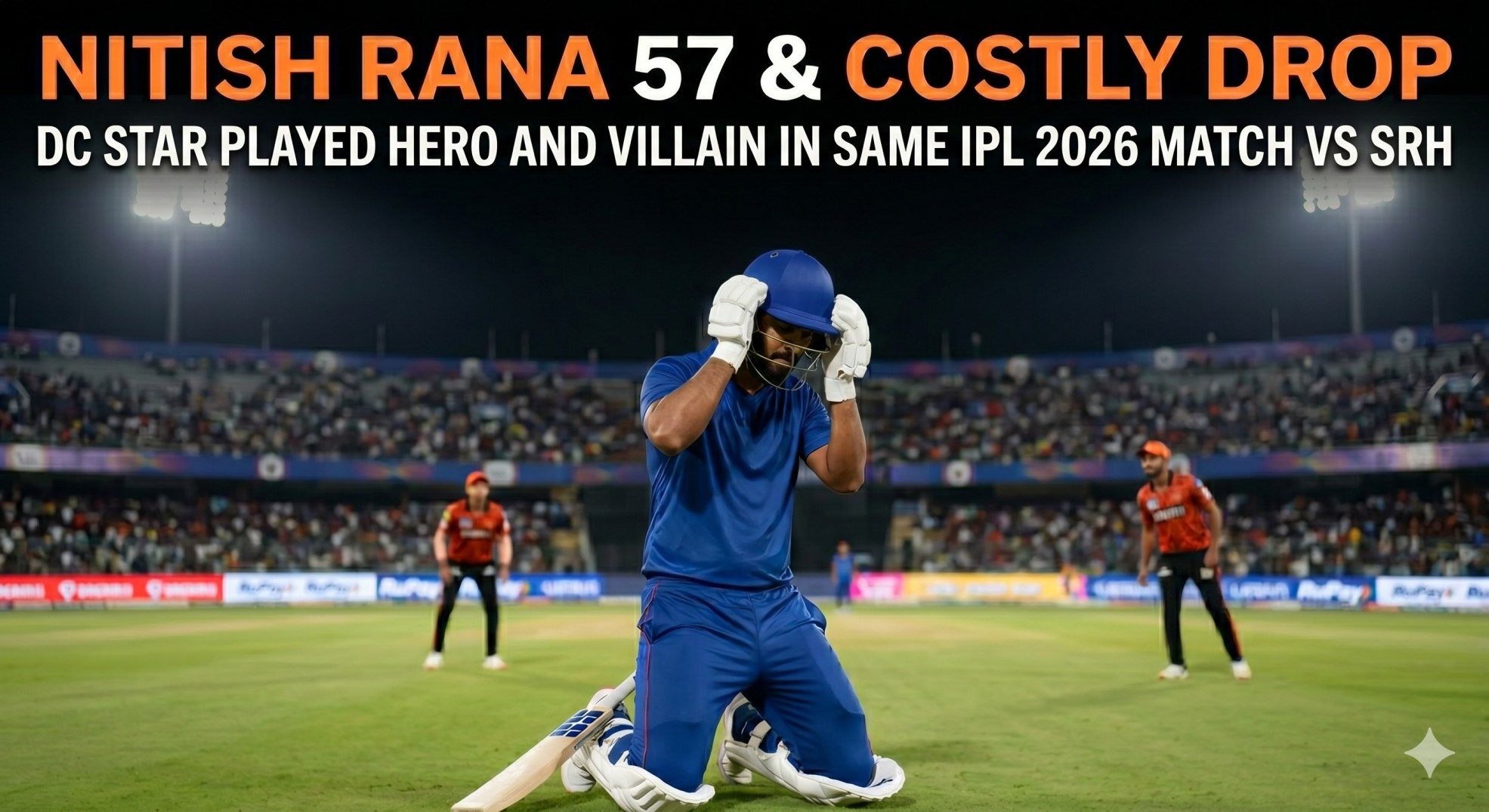
Nitish Rana: Hero and Villain vs SRH
ipl 2026

Nitish Rana: Hero and Villain vs SRH

Nitish Rana 57 & Costly Drop: DC Star Played Hero and Villain in Same IPL 2026 Match vs SRHThe brutal duality of professional cricket was on full display at the Rajiv Gandhi International Stadium as Nitish Rana found himself caught in the middle of a narrative that cast him as both the hero and the villain for the Delhi Capitals. In a high-stakes encounter against the Sunrisers Hyderabad, Rana delivered his most significant batting contribution of the IPL 2026 season, smashing a defiant 57 off just 30 deliveries. As the Capitals attempted to chase down a mountainous target of 243, Rana’s blade provided the only real spark of resistance, characterized by seven crisp boundaries and three towering sixes. For a period in the middle overs, it seemed that his aggressive intent might actually bridge the gap, but the weight of an earlier mistake in the field loomed large over his individual success.Match Summary: SRH vs DCCategoryMatch DetailsVenueRajiv Gandhi International StadiumSRH Score242/2 (20 Overs)DC Score195/9 (20 Overs)ResultSRH Won by 47 RunsPlayer of the MatchAbhishek Sharma (135* off 68)The turning point of the entire match occurred long before Rana took guard to bat. While Abhishek Sharma was in his 80s and threatening to take the game away, a sharp chance came toward Rana in the field, which he uncharacteristically put down. That single drop acted as a lifeline for the young SRH opener, who proceeded to smash an unbeaten 135, effectively adding nearly fifty runs to the total after being "gifted" his stay. This lapse in the field transformed Rana into an accidental architect of his team’s downfall, proving that in a game of such fine margins, a momentary lack of concentration can overshadow even the most courageous of batting half-centuries. By the time Rana reached his own fifty, the required run rate had spiraled out of control, leaving him to play a lone and ultimately futile hand in a 47-run defeat.Match Performance: Nitish Rana (DC)StatisticPerformance DataRuns Scored57Balls Faced30Strike Rate190.00Fours / Sixes7 / 3StatusDismissed by Eshan MalingaFieldingDropped Abhishek Sharma (at 80+ runs)The atmosphere in the Delhi dugout was one of somber reflection as the match concluded, with Rana’s performance serving as a microcosm of the Capitals' season—moments of brilliance undermined by fundamental errors. While he successfully navigated the pace of Eshan Malinga for a significant portion of his innings, he eventually fell to Malinga just as he was looking to launch a final assault. The disappointment on his face as he walked back to the pavilion told the story of a player who knew that while his 57 runs would look good on the scorecard, the "century gift" he provided to the opposition was the statistic that truly dictated the result. Cricket remains an unforgiving sport where redemption and regret often walk hand in hand, and for Nitish Rana, Match 31 was a night where he experienced the extreme ends of that spectrum.The Finishers: DC Chase vs SRH BowlingPlayerRoleMatch FiguresImpactNitish RanaBatter57 (30)Highest scorer in the chaseSameer RizviBatter41 (28)Valiant middle-order effortEshan MalingaBowler4/32 (4.0)Career-best IPL figuresHarsh DubeyBowler3/12 (2.0)Clinical late magicAs the Capitals move forward to their next fixture, the management will need to address the psychological impact of such "hero-villain" performances. Rana’s ability to strike at 190.00 is a vital asset, but the team's collective fielding must improve if they are to defend or chase record totals in this explosive 2026 edition of the IPL. For the fans at CricDesi and beyond, this match remains a stark reminder that a player can be the best and the most frustrated person on the pitch simultaneously. The 47-run loss leaves Delhi at the 9th spot on the points table, and while Rana has found his form with the bat, the cost of that dropped catch will serve as a haunting lesson in the importance of every single ball in the Tata IPL.Top Performers of the MatchAbhishek Sharma (SRH): 135* (68) — The record-breaking centurion.Nitish Rana (DC): 57 (30) — Highest resistance for Delhi.Eshan Malinga (SRH): 4/32 (4.0) — The primary destructor.Sameer Rizvi (DC): 41 (28) — Significant middle-order fight.Heinrich Klaasen (SRH): 37* (13) — Explosive finishing act.The narrative of Nitish Rana’s contribution to Match 31 of IPL 2026 is a fascinating study in the unforgiving nature of top-flight cricket, where a player’s brilliance with the bat can be almost entirely neutralized by a single lapse in the field. As the Delhi Capitals took on the high-flying Sunrisers Hyderabad at the Rajiv Gandhi International Stadium, Rana delivered a performance that swung violently between the roles of hero and villain. On one hand, he was the primary architect of Delhi’s resistance, smashing a defiant 57 off just 30 balls—his first half-century of the season. On the other hand, his dropped catch of Abhishek Sharma when the opener was in the 80s provided a lifeline that ultimately cost Delhi the match.The magnitude of that dropped catch cannot be overstated. Abhishek was batting on 86 when a sharp chance presented itself to Rana at deep backward point off the bowling of T. Natarajan. In an uncharacteristic lapse for a fielder of his caliber, Rana put the chance down. It was a mistake that proved fatal for the Capitals’ aspirations. Abhishek proceeded to add another 49 runs to his total, finishing unbeaten on 135 and propelling SRH to a monumental 242/2. The psychological blow to the bowling unit was immediate, and the extra runs added after the drop essentially formed the 47-run margin by which Delhi eventually lost the contest.Nitish Rana: IPL 2026 Season StatsMetricSeason TotalMatches Played4Total Runs77Average19Strike Rate137.5Highest Score57 (vs SRH)When Rana arrived at the crease during the chase, he played with the intensity of a man seeking immediate redemption. He launched an all-out assault on the SRH spinners, most notably taking 19 runs off a single over from Shivang Kumar to race to a 27-ball fifty. His strike rate of 190.00 briefly made the impossible chase of 243 look plausible. He combined with KL Rahul for an 86-run stand that kept the Capitals in the hunt well into the middle overs. However, the duality of his night was completed when he holed out to long-on off the bowling of Eshan Malinga, just as the required rate was beginning to climb past 14 runs per over.As the Capitals reflect on their 47-run defeat, the "Nitish Rana paradox" remains the central talking point. While his 57 runs provided a blueprint for how to handle the SRH attack, his error in the field highlights the reality that against an opposition this clinical, there is no margin for error. For a team currently languishing at the 9th spot on the points table, every half-chance must be taken. Rana’s night was a brutal reminder that in the T20 format, the scorecard only tells half the story; the other half is often written in the opportunities that were left on the grass.Founder's Questions: Nitish Rana struck at 190.00 today, easily the best of the DC batters. However, in a chase of 243, is a 30-ball 57 actually enough? Or has the 'Impact Player' era pushed the requirements so high that even a half-century at a 190 strike rate is now considered a 'losing' effort?
Apr 22, 2026 Harshvardhan Singh Gaur
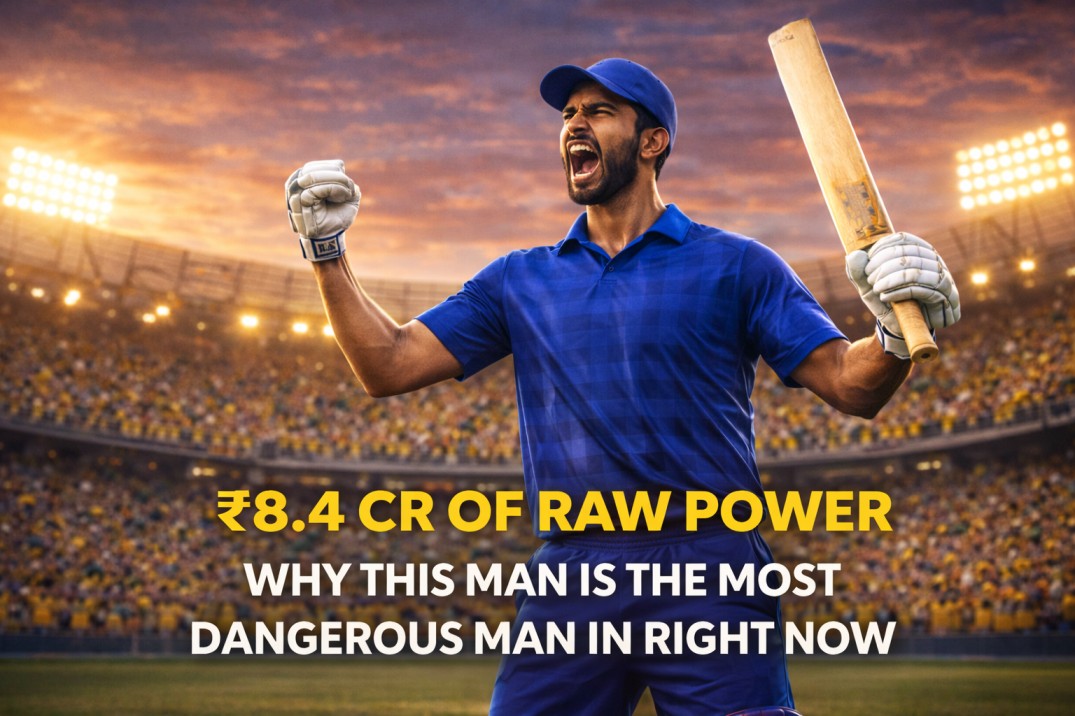
₹8.4 Cr of Raw Power: Why Sameer Rizvi is the most dangerous man in IPL 2026 right now.
ipl 2026

₹8.4 Cr of Raw Power: Why Sameer Rizvi is the most dangerous man in IPL 2026 right now.

Sameer Rizvi is Making ₹8.4 Cr Look Like a Bargain: How DC’s New Finisher Became the Fastest Orange Cap LeaderWhat adds another layer to Sameer Rizvi’s rise is how quickly he has earned respect in situations where experience usually dominates. Bowlers are no longer experimenting against him — they are planning carefully, adjusting lengths, and even holding back their best deliveries for later. That shift says a lot. It means Rizvi is no longer considered a newcomer who might fail under pressure; he is now treated as a genuine threat who must be contained.There is also a visible change in how fielding teams react when he is at the crease. Captains are more vocal, field placements become more aggressive or defensive depending on the situation, and bowlers take longer between deliveries. These small behavioral changes reveal a larger truth — Rizvi is influencing decisions even before he plays a shot. And that kind of influence is rare for someone so early in their IPL journey.Another important aspect is how he is building partnerships. Power hitters are often considered isolated impact players, but Rizvi seems to understand the rhythm of batting with others. He rotates strikes when needed, allows set batters to continue, and then accelerates at the right moment. This awareness ensures that his aggression does not disrupt the team’s structure but instead strengthens it.If this growth continues, Rizvi won’t just be a match-winner—he could become a player around whom innings are built. And that transition, from finisher to central figure, is what truly defines long-term success in T20 cricket.There are moments in the Indian Premier League when a player doesn’t just perform — he changes how the game feels. Sameer Rizvi is beginning to create that kind of impact in IPL 2026. It’s not just about runs, or strike rate, or even match-winning innings. It’s about the way those runs are scored — quickly, decisively, and often at a point in the game where hesitation from either side can define the outcome. And right now, Rizvi looks like a player who has no interest in hesitation.What has happened over the past few matches is a shift from promise to presence. Rizvi is no longer a young player trying to prove himself; he is becoming a batter opponents actively plan for. That is a significant transition. It means his performances are no longer surprising — they are expected. And yet, despite that expectation, he continues to find ways to impose himself on the game.Why is this happening? Because Rizvi’s approach is built on clarity. He is not trying to play multiple roles at once. He is not caught between anchoring and attacking. He understands his strength—power—, and he commits to it fully. That commitment removes doubt from his game. Every shot is played with intent, every decision is made quickly, and every over he faces feels like it could shift momentum.There is also something distinctive about how he generates that power. It is not reckless hitting. It is controlled aggression. His bat speed is high, but his shot selection is calculated. He picks lengths early, targets specific areas, and rarely looks rushed. That combination of power and awareness is what makes him dangerous. Because while many players can hit big shots, fewer can do so consistently without losing shape.From a match perspective, Rizvi’s impact is most visible in transition phases—those moments where games are neither stable nor chaotic. When a team is rebuilding after early wickets, or when they are looking to accelerate without risking collapse, Rizvi provides a bridge. He doesn’t just maintain momentum; he amplifies it. And in doing so, he often changes the direction of the match.This is particularly evident in how he handles pressure. Many young players struggle when the situation demands immediate impact. Rizvi, however, seems to embrace those moments. His innings are not built slowly; they arrive suddenly. A quiet game can turn aggressive within a few overs, and once that shift happens, it is difficult to reverse.For his team, such an approach creates a strategic advantage. Having a player who can change tempo so quickly allows for greater flexibility in planning. It reduces dependence on traditional finishing roles and distributes responsibility across the batting order. It also forces opponents to adjust their strategies, often earlier than they would prefer.But there is also a broader implication to Rizvi’s rise. It reflects a change in how young players are approaching T20 cricket. There is less emphasis on gradual progression and more on immediate impact. Players are entering the league with a clear understanding of their strengths and a willingness to express them. Rizvi embodies that shift. He is not trying to fit into an existing template; he is creating his own.At the same time, this approach comes with challenges. Consistency is the next step. Explosive performances attract attention, but sustaining them requires adaptation. Opponents will study him, identify patterns, and develop plans to counter his strengths. The question is not whether Rizvi can dominate—he already has. The question is whether he can evolve as the competition adjusts.There is also the physical and mental aspect of maintaining such an aggressive style. High-intensity batting requires energy, focus, and resilience. It demands quick decision-making and the ability to recover from failure. Because in T20 cricket, even the most aggressive players will have off days. How Rizvi responds to those moments will shape the next phase of his career.What this means for IPL 2026 is significant. Players like Rizvi don’t just contribute; they influence how matches are played. They force teams to rethink strategies, to adjust field placements, and to reconsider bowling plans. They create uncertainty, and in a format that thrives on unpredictability, that is a powerful advantage.For fans and observers, this also adds a new layer of excitement. There is anticipation when Rizvi walks in—not just for runs, but for impact. The sense that something could change quickly, that the game could shift in a matter of overs. That kind of presence is rare, and it is what elevates players from being effective to being influential.Looking ahead, the key for Rizvi will be balance. Not in the sense of reducing aggression, but in refining it. Adding variations to his game, understanding different match situations, and maintaining composure under pressure. Because while raw power can dominate in phases, sustained success requires adaptability.In the end, this is not just about one season or one player. It is about the evolution of the game itself. IPL 2026 is highlighting a new generation of players who are redefining what it means to be effective in T20 cricket. Sameer Rizvi is at the forefront of that movement.If he keeps this up, he won't just be one of the tournament's most dangerous batters; he'll help shape how it's played.

Apr 10, 2026 Harshvardhan Singh Gaur
DC won by 6 wickets, Sameer Rizvi 90 off 51 (7 fours, 7 sixes), Player of the Match.
ipl 2026

DC won by 6 wickets, Sameer Rizvi 90 off 51 (7 fours, 7 sixes), Player of the Match.

Delhi Capitals secured a convincing 6-wicket victory over Mumbai Indians at the Arun Jaitley Stadium. The highlight of the match was the outstanding performance by Sameer Rizvi, who played a crucial role in guiding his team to victory and was deservedly named Player of the Match.Delhi Capitals and Mumbai Indians were another strong example of how smart cricket often beats aggressive but inconsistent play. Delhi Capitals secured a convincing 6-wicket victory at the Arun Jaitley Stadium, chasing down 163 with composure and control. The standout performer of the night was Sameer Rizvi, whose mature and well-paced innings guided his team home without any late drama.Match SummaryMatch: DC vs MIResult: Delhi Capitals won by 6 wicketsVenue: Arun Jaitley Stadium, DelhiScorecard: MI: 162/6 (20 overs)DC: 164/4 (18.1 overs)Mumbai Indians, batting first, posted 162 for 6 in their 20 overs, a total that looked competitive but slightly below what was needed on a decent batting surface. The innings started steadily, with the openers focusing on building a base rather than going for big shots early on. However, as the innings progressed, the lack of acceleration became noticeable. The middle overs turned out to be the biggest problem for Mumbai, as Delhi’s bowlers tightened their lines and didn’t allow easy scoring opportunities. There were no big partnerships, and even though a few batters got starts, none of them converted them into a significant score. In the final overs, Mumbai tried to push harder, but the momentum never really shifted. It felt like they were always 15–20 runs short of a truly competitive total.Chasing 163, the Delhi Capitals came out with a clear plan. There was no rush, no unnecessary aggression—just a steady approach that kept the required rate under control from the beginning. The openers played sensibly, picking boundaries at the right moments and rotating strikes effectively. Even when wickets fell, there was no visible panic in the camp. The chase always felt under control, and that calmness made a huge difference as the innings progressed.When Sameer Rizvi came to the crease, the match was still balanced, but Delhi needed someone to take responsibility and guide the innings forward. Rizvi accomplished this task with great finesse. In the 12th over, he played a beautiful lofted drive over extra cover for a boundary, a shot that showed both confidence and control. A couple of overs later, he pulled a short ball behind square for another four, once again displaying perfect timing. These weren’t reckless shots; they were calculated, precise, and perfectly suited to the situation.No panic. No hesitation. Rizvi displayed smart batting during a tense moment.As the innings moved forward, Rizvi ensured that the required runs never became a problem. He rotated the strike efficiently and punished loose deliveries without taking unnecessary risks. Slowly but surely, the pressure shifted away from Delhi and onto Mumbai. Out of nowhere, what looked like a competitive chase started to feel comfortable. That’s the impact of a well-constructed innings.Rizvi’s knock wasn’t about hitting sixes every over; it was about controlling the game. He read the situation perfectly and adjusted his approach accordingly. His ability to maintain the flow of runs without allowing the opposition to build pressure was the key difference between the two teams. This innings marked a significant turning point, not due to a single over, but due to his consistent efforts to keep Delhi ahead in the chase.Unsurprisingly, he was named Player of the Match. His contribution went beyond just scoring runs; it was about guiding the team, maintaining composure, and ensuring that the chase never slipped away. These performances underscore his status as one of the tournament's most exciting young players.For the Delhi Capitals, this victory is a big positive. It indicates that the team is finding its rhythm and understanding how to handle different match situations. Their ability to stay calm under pressure and execute their plans effectively is a strong sign for the rest of the season. On the other hand, the Mumbai Indians will need to reassess their approach, especially in the middle overs, where they lost control of the game.Another important takeaway from this match is how crucial partnerships and game awareness are in T20 cricket. Delhi didn’t solely depend on individual brilliance; they meticulously constructed their innings, ensuring the chase remained on track throughout. This kind of approach wins matches and builds long-term confidence within the team.Looking ahead, Sameer Rizvi’s performance could be a defining moment in his IPL journey. In a tournament filled with big names, it’s not simple for young players to stand out, but Rizvi has shown that he has both the skill and the temperament to succeed at this level. If he continues to perform like this, he could soon become a key player not just for the Delhi Capitals but also a name to watch in Indian cricket.In the end, this match was not about explosive hitting or last-over drama. It was about control, clarity, and execution. Delhi Capitals didn’t just chase the target—they managed the game brilliantly from start to finish. And at the heart of it all was Sameer Rizvi, who made a challenging chase look simple with his composed and intelligent batting.As IPL 2026 moves forward, performances like these remind us that T20 cricket is not just about power—it’s also about smart decision-making and staying calm in crucial moments. Delhi Capitals have shown they can do both, and with players like Rizvi stepping up, they are definitely a team to watch in the coming matches.

Apr 09, 2026 Harshvardhan Singh Gaur
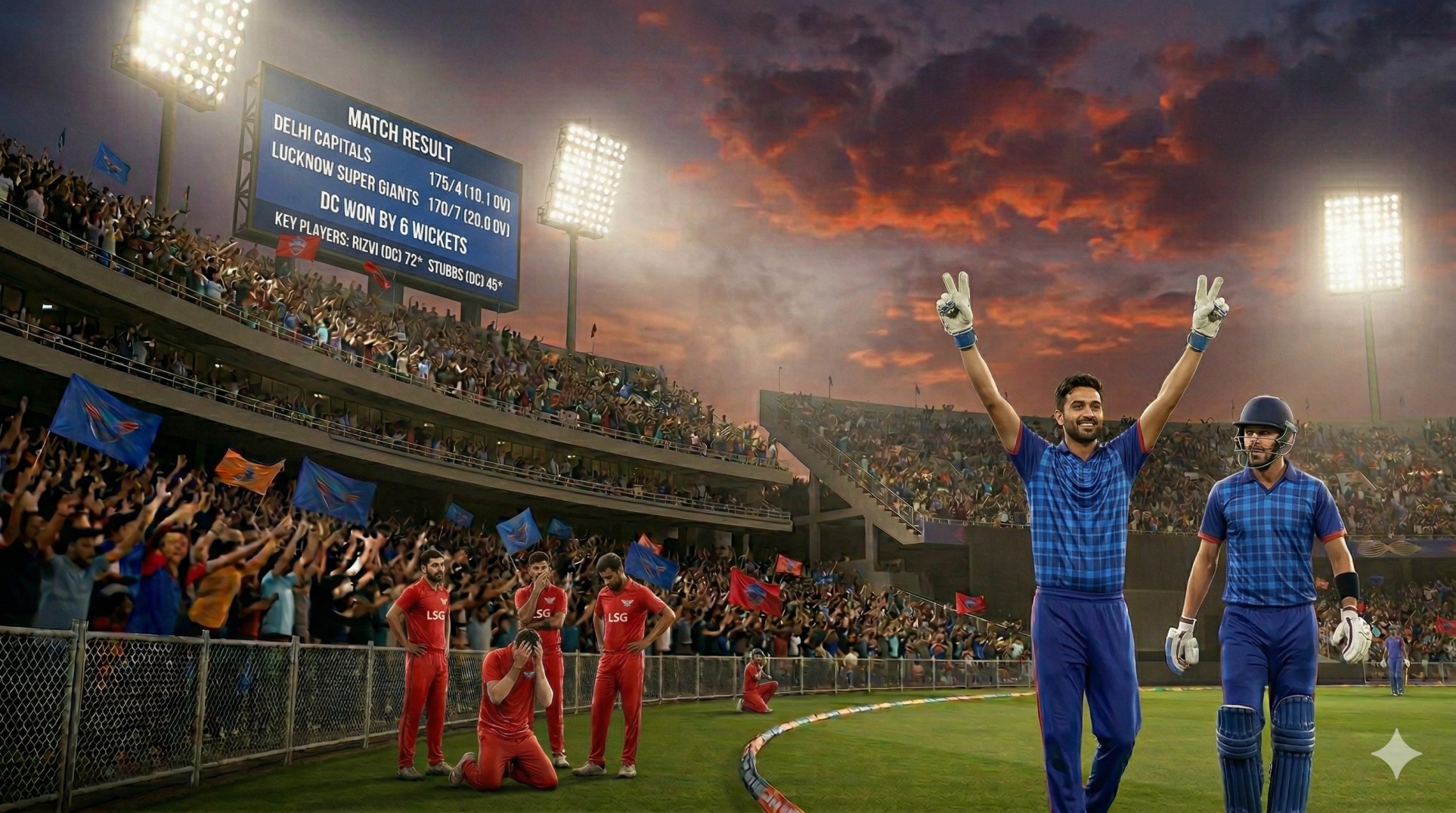
LSG vs DC Match Result: Rizvi & Stubbs Power Delhi Capitals to 6-Wicket Win
ipl 2026

LSG vs DC Match Result: Rizvi & Stubbs Power Delhi Capitals to 6-Wicket Win

Delhi Capitals defeated Lucknow Super Giants by 6 wickets at the Ekana Stadium in a low-scoring but exciting IPL match.Delhi got off to a slow start, but a fantastic partnership between two batters changed the game and helped them win. Match SummaryMatch: LSG vs DCResult: Delhi Capitals won by 6 wicketsPlayer of the Match: Sameer RizviScorecard:LSG: 141 (18.4 overs)DC: 145/4 (17.1 overs)Delhi Capitals chased down the target with six wickets in hand—but the real story lies in how calmly and intelligently they executed the chase. Against the Lucknow Super Giants, the victory wasn’t just about hitting boundaries; it was about understanding the moment, absorbing pressure, and striking at exactly the right time. Delhi Capitals have a strong batting attack with experienced bowlers.The chase didn’t begin with fireworks, and that’s what made it even more impressive. Delhi Capitals didn’t rush. They meticulously constructed the innings, guaranteeing that the required run rate remained under control. This is something that separates good teams from confident teams—they don’t panic even when the scoreboard demands quick runs. Instead, they trust their process. First Innings HighlightsThe Lucknow Super Giants faced a challenging day at the crease after taking the first turn at bat.Early wickets put them under pressureLungi Ngidi and T Natarajan led the bowling attack.Key batters like Nicholas Pooran and Rishabh Pant failed to make an impactOnly:Abdul Samad (36)Mitchell Marsh (35)showed some resistance, helping LSG reach 141 before being bowled out.Second Innings HighlightsDelhi Capitals’ chase started disastrously.KL Rahul fell for a golden duckDC slipped to under 30/4, putting them under huge pressureBut then came the game-changing moment. The Match-Winning PartnershipSameer Rizvi played a sensational knock of 70 (47)*Tristan Stubbs supported brilliantly with 39 (32).*Their unbeaten 115-run partnership completely shifted momentum.The duo accelerated in the final overs and finished the chase with ease. Turning Points of the MatchEarly collapse of DC (30/4)Rizvi–Stubbs partnership (match-defining )LSG is failing to defend a low totalPoor middle-over control by LSG bowlers Top PerformersSameer Rizvi—70* match-winning knockTristan Stubbs – Calm anchor under pressureLungi Ngidi – 3 wickets, early breakthroughsT Natarajan – Key spells in powerplayThen came the phase that changed everything. Sameer Rizvi and Tristan Stubbs took charge, and suddenly the match shifted. Rizvi, in particular, played with a fearless mindset. His intent was clear—attack, but with control. He didn’t swing blindly; he picked his moments, targeted the right bowlers, and kept the pressure on Lucknow.Stubbs complemented him perfectly. While Rizvi brought aggression, Stubbs brought stability. This partnership was not just about runs—it was about balance. One player accelerated; the other ensured there were no mistakes. That combination proved to be lethal in T20 cricket, leaving LSG with no solutions once the momentum shifted.Why did the shift happen? Because the Delhi Capitals looked like a team with clarity. Every player knew their role. There was no confusion about who should attack and who should anchor. In contrast, Lucknow Super Giants seemed slightly reactive. Their bowling changes didn’t create pressure, and their field placements lacked that attacking intent needed in crucial overs.Another important factor was composure. Delhi never allowed the game to become chaotic. Even when the equation tightened slightly, they stayed calm. Such an environment is where leadership plays a role. The team looked in control, and that calmness reflected in their decision-making.What does this victory mean going forward? For the Delhi Capitals, this win is more than just two points. It reinforces their identity as a balanced and mature side. They are not just relying on individual brilliance—they are winning as a unit. That’s a dangerous sign for other teams.For Lucknow Super Giants, this match raises important questions. They have the talent, but they need consistency. They need to find a way to control games instead of reacting to them. Because in IPL 2026, reacting is not enough—you need to dictate.In the end, the match wasn’t just a chase—it was a lesson. A lesson in timing, composure, and clarity. Delhi Capitals didn’t just win the match; they showed how modern T20 cricket is meant to be played.What made this victory even more impressive was the way Delhi Capitals handled the middle overs, a phase where many chases tend to slow down or collapse under pressure. Instead of forcing big shots on every ball, they focused on smart cricket—rotating strikes, finding gaps, and waiting for the right moment to attack. This approach ensured that the required run rate never became a burden, and it kept the opposition under constant pressure without taking unnecessary risks.For Lucknow Super Giants, this phase exposed a key weakness. Their bowlers were unable to build sustained pressure, and once the rhythm slipped, it became difficult to pull things back. In T20 cricket, maintaining control is crucial, and LSG appeared to lose that control precisely when they needed it the most. Their failure to disrupt the partnership between Rizvi and Stubbs proved detrimental, as the game gradually slipped away from them.Another subtle but important factor was intent. Delhi Capitals showed positive intent throughout the chase—not reckless aggression, but calculated attacking cricket. They respected excellent deliveries but punished anything loose. This balance between caution and aggression is what makes a successful chasing side.Looking ahead, this match could be a turning point for Delhi Capitals. Wins like these build belief within the squad and create momentum that can carry a team deep into the tournament. For the Lucknow Super Giants, however, this defeat is a reminder that talent alone isn’t enough. They need better execution, sharper tactics, and more consistency if they want to compete at the highest level this season.This match perfectly highlighted the unpredictable nature of T20 cricket. From being 30/4 to winning comfortably, the Delhi Capitals showed calmness.If this form continues, DC could become a serious contender in IPL 2026.

Apr 09, 2026 Harshvardhan Singh Gaur
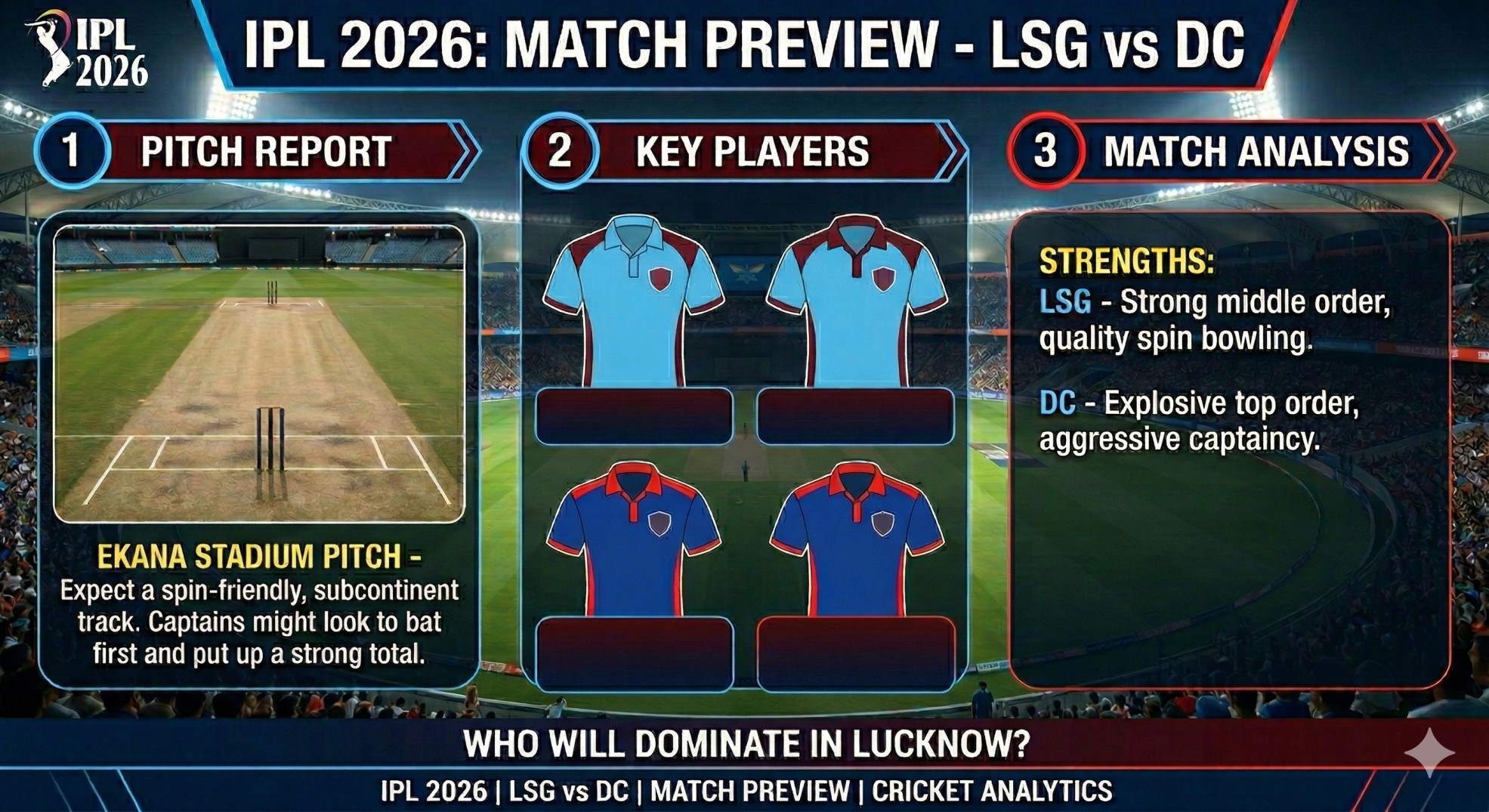
IPL 2026: LSG vs DC Match Preview – Pitch Report, Key Players & Analysis
ipl 2026

IPL 2026: LSG vs DC Match Preview – Pitch Report, Key Players & Analysis

Lucknow Super Giants face Delhi Capitals on April 1 at Ekana Stadium in what promises to be a great IPL match.In a tournament where momentum changes faster than fans can refresh scorecards, some matches feel heavier than others even before the toss. The contest between the Delhi Capitals and the Lucknow Super Giants is exactly that kind of game. On paper, it’s just another league match. But in reality, it is a clash of structure versus uncertainty, calm leadership versus pressure, and balance versus reliance. Both teams need a win to get off to a good start. With strong batters and bowlers on each side, this should be a closely fought gameMatch DetailsMatch: LSG vs DCDate: April 1, 2026Tournament: IPL 2026Venue: Shri Atal Vihari Vajpayee Ekana Stadium, LucknowTime: 7:30 PM ISTPitch ReportThe pitch is expected to be batting-friendly early on, offering good pace and bounce. As the game progresses, pacers could play a key role, especially in the middle overs.Average score: 160–180Dew factor: Likely to help chasing teamsWhat is expected here is a competitive game, but the deeper story is far more interesting. Delhi Capitals are entering this match as a team that looks complete. Their batting is reliable, their bowling is adaptable, and most importantly, their game plan feels clear. Lucknow Super Giants, on the other hand, are still trying to stitch together consistency. They have match-winners, no doubt, but they are yet to function like a well-oiled unit this season.Key Players to WatchKL RahulRishabh PantDigvesh Singh RathiMohammad ShamiNicholas PooranKuldeep YadavSameer RizviTristan StubbsThe biggest visible difference right now is leadership. Axar Patel has quietly turned into a composed and effective captain. He doesn’t chase moments; he controls them. His field placements show intent, his bowling changes show awareness, and his overall approach reflects clarity. That calmness spreads through the team, and it shows in how Delhi handles pressure phases.In contrast, Rishabh Pant appears to be leading under a different kind of weight. Expectations are high, and the team around him is still evolving. Pant is naturally aggressive, but leadership in T20 cricket often demands timing over instinct. At times, his decisions feel reactive rather than calculated, and against a settled side like Delhi, those small moments can become turning points.From a team composition perspective, the Delhi Capitals look far more balanced. Their batting lineup is not just about big names but about roles. There is stability at the top, flexibility in the middle, and finishing ability at the end. Their bowling unit complements this perfectly, offering both pace and spin options across all phases of the innings. Whether it is the powerplay, middle overs, or death, Delhi seems to have answers.Lucknow Super Giants, however, are more dependent on their batting strength. When their top order fires, they look unstoppable. But when early wickets fall, or momentum slows down, the team sometimes struggles to recover. Their bowling has shown flashes, but it hasn’t consistently backed their batting efforts, and that imbalance is costing them in IPL 2026.Another important factor is how both teams have evolved. Delhi Capitals today are a completely different side compared to what they were five years ago. Back then, they were unpredictable and often inconsistent. Now, they look structured, confident, and tactically aware. There is a sense of maturity in how they approach matches, and that makes them a serious contender.Lucknow Super Giants, on the other hand, are still searching for rhythm this season. Despite having quality players, they haven’t been able to convert potential into consistent performances. That lack of rhythm often becomes visible in crucial moments, where games are decided.What makes this match even more intense is the psychological angle. Delhi is playing with confidence. They know their strengths, and more importantly, they trust their system. Lucknow, however, is still building that belief. And in a tournament like the IPL, confidence is often the difference between winning and losing tight games.From a tactical point of view, Delhi will likely focus on controlling the middle overs. If they can restrict Lucknow during that phase, they can build pressure and force errors. Lucknow, in contrast, will need to break Delhi’s rhythm early. They cannot afford to let the game drift because Delhi is a team that thrives on control.What this match means in the future is huge. For the Delhi Capitals, a win strengthens their position and validates their approach. It sends a message that they are not just playing well but playing smart. For Lucknow Super Giants, this is more than just a game. It is an opportunity to reset their season, to find confidence, and to prove that they can compete with balanced teams.If you look a little deeper into this contest, one more layer becomes very clear — it’s not just about teams, it’s about how well they understand pressure moments. Delhi Capitals right now look like a side that has already figured out how to win tight situations. They don’t panic when the required run rate climbs, and they don’t lose control when opposition batters start attacking. That calmness is not accidental — it comes from clarity in roles and trust in their system. Every player seems to know exactly what is expected from them, and that reduces confusion in crunch moments.On the other side, Lucknow Super Giants are still in that phase where they are trying to define those roles. You can see it in the way their innings sometimes fluctuate. One over, they look dominant, the next they slow down unexpectedly. That inconsistency is not about lack of talent, it’s about lack of rhythm. And in a fast-paced tournament like IPL, rhythm is everything.Another important angle here is how both teams handle transitions in the game. Delhi Capitals have shown that they can shift gears smoothly. If they lose early wickets, they rebuild. If they get a strong start, they capitalize. This flexibility makes them unpredictable in a good way. Lucknow, however, have struggled in these transition phases. When their initial plan doesn’t work, they sometimes take time to adjust, and that delay can cost them momentum.Also, Delhi’s improvement over the years cannot be ignored. This is not the same team that used to rely heavily on individual performances. This is a team that now wins collectively. Their batting and bowling support each other, and that balance gives them an edge. In contrast, Lucknow still feels like a team where individual brilliance plays a bigger role than collective execution.And that’s where this match becomes fascinating. Because if Lucknow Super Giants can click as a unit, they have the firepower to challenge anyone. But if they continue to rely on moments rather than structure, Delhi Capitals will likely take control.In the end, this game could come down to one simple question — consistency or explosiveness, which one wins today? And more often than not, consistency quietly walks away with the points.In the end, this is not just about who scores more runs or takes more wickets. It is about which team understands the situation better. Delhi brings balance, clarity, and calm execution. Lucknow brings firepower, unpredictability, and moments of brilliance. And in T20 cricket, brilliance can win you matches—but balance wins you tournaments. Both teams want to start the season well, so this match is going to be important for both sides. Expect big hitting, key wickets, and an intense batting till the end.

Apr 09, 2026 Harshvardhan Singh Gaur