₹8.4 Cr of Raw Power: Why Sameer Rizvi is the most dangerous man in IPL 2026 right now.
Harshvardhan Singh Gaur
Apr 10, 2026 • 6 min read
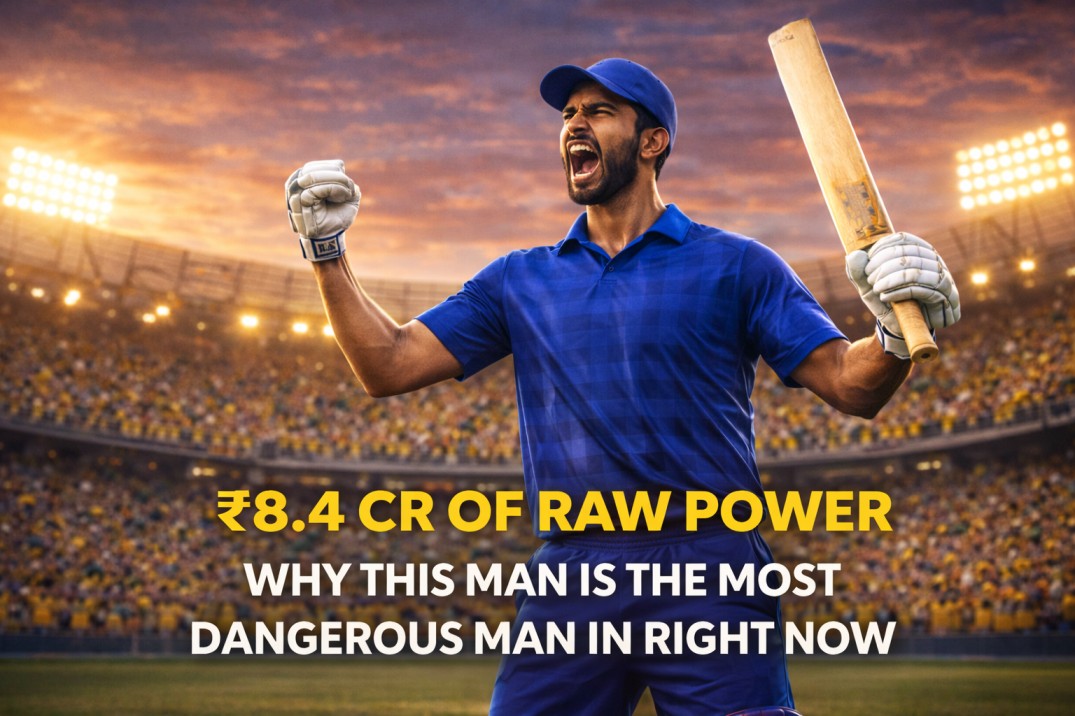
Sameer Rizvi is Making ₹8.4 Cr Look Like a Bargain: How DC’s New Finisher Became the Fastest Orange Cap Leader
What adds another layer to Sameer Rizvi’s rise is how quickly he has earned respect in situations where experience usually dominates. Bowlers are no longer experimenting against him — they are planning carefully, adjusting lengths, and even holding back their best deliveries for later. That shift says a lot. It means Rizvi is no longer considered a newcomer who might fail under pressure; he is now treated as a genuine threat who must be contained.
There is also a visible change in how fielding teams react when he is at the crease. Captains are more vocal, field placements become more aggressive or defensive depending on the situation, and bowlers take longer between deliveries. These small behavioral changes reveal a larger truth — Rizvi is influencing decisions even before he plays a shot. And that kind of influence is rare for someone so early in their IPL journey.
Another important aspect is how he is building partnerships. Power hitters are often considered isolated impact players, but Rizvi seems to understand the rhythm of batting with others. He rotates strikes when needed, allows set batters to continue, and then accelerates at the right moment. This awareness ensures that his aggression does not disrupt the team’s structure but instead strengthens it.
If this growth continues, Rizvi won’t just be a match-winner—he could become a player around whom innings are built. And that transition, from finisher to central figure, is what truly defines long-term success in T20 cricket.
There are moments in the Indian Premier League when a player doesn’t just perform — he changes how the game feels. Sameer Rizvi is beginning to create that kind of impact in IPL 2026. It’s not just about runs, or strike rate, or even match-winning innings. It’s about the way those runs are scored — quickly, decisively, and often at a point in the game where hesitation from either side can define the outcome. And right now, Rizvi looks like a player who has no interest in hesitation.
What has happened over the past few matches is a shift from promise to presence. Rizvi is no longer a young player trying to prove himself; he is becoming a batter opponents actively plan for. That is a significant transition. It means his performances are no longer surprising — they are expected. And yet, despite that expectation, he continues to find ways to impose himself on the game.
Why is this happening? Because Rizvi’s approach is built on clarity. He is not trying to play multiple roles at once. He is not caught between anchoring and attacking. He understands his strength—power—, and he commits to it fully. That commitment removes doubt from his game. Every shot is played with intent, every decision is made quickly, and every over he faces feels like it could shift momentum.
There is also something distinctive about how he generates that power. It is not reckless hitting. It is controlled aggression. His bat speed is high, but his shot selection is calculated. He picks lengths early, targets specific areas, and rarely looks rushed. That combination of power and awareness is what makes him dangerous. Because while many players can hit big shots, fewer can do so consistently without losing shape.
From a match perspective, Rizvi’s impact is most visible in transition phases—those moments where games are neither stable nor chaotic. When a team is rebuilding after early wickets, or when they are looking to accelerate without risking collapse, Rizvi provides a bridge. He doesn’t just maintain momentum; he amplifies it. And in doing so, he often changes the direction of the match.
This is particularly evident in how he handles pressure. Many young players struggle when the situation demands immediate impact. Rizvi, however, seems to embrace those moments. His innings are not built slowly; they arrive suddenly. A quiet game can turn aggressive within a few overs, and once that shift happens, it is difficult to reverse.
For his team, such an approach creates a strategic advantage. Having a player who can change tempo so quickly allows for greater flexibility in planning. It reduces dependence on traditional finishing roles and distributes responsibility across the batting order. It also forces opponents to adjust their strategies, often earlier than they would prefer.
But there is also a broader implication to Rizvi’s rise. It reflects a change in how young players are approaching T20 cricket. There is less emphasis on gradual progression and more on immediate impact. Players are entering the league with a clear understanding of their strengths and a willingness to express them. Rizvi embodies that shift. He is not trying to fit into an existing template; he is creating his own.
At the same time, this approach comes with challenges. Consistency is the next step. Explosive performances attract attention, but sustaining them requires adaptation. Opponents will study him, identify patterns, and develop plans to counter his strengths. The question is not whether Rizvi can dominate—he already has. The question is whether he can evolve as the competition adjusts.
There is also the physical and mental aspect of maintaining such an aggressive style. High-intensity batting requires energy, focus, and resilience. It demands quick decision-making and the ability to recover from failure. Because in T20 cricket, even the most aggressive players will have off days. How Rizvi responds to those moments will shape the next phase of his career.
What this means for IPL 2026 is significant. Players like Rizvi don’t just contribute; they influence how matches are played. They force teams to rethink strategies, to adjust field placements, and to reconsider bowling plans. They create uncertainty, and in a format that thrives on unpredictability, that is a powerful advantage.
For fans and observers, this also adds a new layer of excitement. There is anticipation when Rizvi walks in—not just for runs, but for impact. The sense that something could change quickly, that the game could shift in a matter of overs. That kind of presence is rare, and it is what elevates players from being effective to being influential.
Looking ahead, the key for Rizvi will be balance. Not in the sense of reducing aggression, but in refining it. Adding variations to his game, understanding different match situations, and maintaining composure under pressure. Because while raw power can dominate in phases, sustained success requires adaptability.
In the end, this is not just about one season or one player. It is about the evolution of the game itself. IPL 2026 is highlighting a new generation of players who are redefining what it means to be effective in T20 cricket. Sameer Rizvi is at the forefront of that movement.
If he keeps this up, he won't just be one of the tournament's most dangerous batters; he'll help shape how it's played.