MI 123/2 vs PBKS: Will Hardik & Tilak Save Mumbai at Wankhede? IPL 2026
Harshvardhan Singh Gaur
Apr 16, 2026 • 6 min read
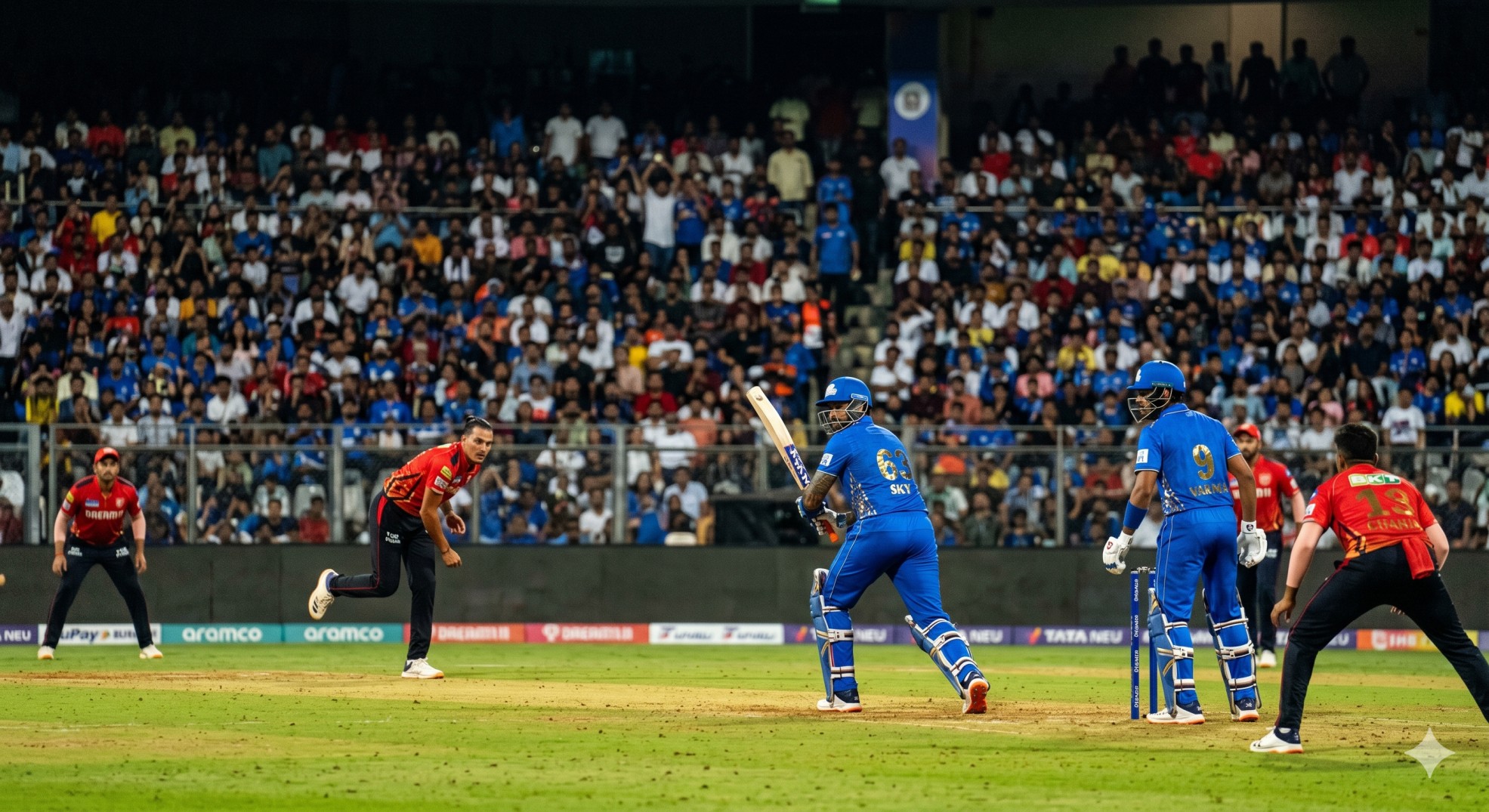
MI vs PBKS Match 24 IPL 2026 at Wankhede Stadium, April 16. Mumbai needs a win badly. Punjab is unbeaten. Who wins this high-voltage clash tonight?
“Wankhede ne Mumbai Indians ko bahut baar bachaya hai… lekin aaj, yeh stadium bhi khamosh lag raha hai.” Mumbai Indians 48/2 par khadi hai, aur scorecard sirf numbers nahi bata raha—yeh ek team ki current situation ka reflection hai. Do wickets gir chuki hain, aur woh bhi early phase mein, jab usually MI apna base banati hai. Lekin aaj kuch alag hai. Energy missing hai, flow missing hai, aur sabse important—confidence missing lag raha hai.
Powerplay ke baad ka yeh moment match ka turning phase ban sakta hai. Ek side par Punjab Kings ka bowling attack hai jo bilkul disciplined lag raha hai. Length perfect, line tight, AR field placements bilkul calculated. Har ball ke baad ek message aa raha hai—"Easy runs nahi milenge.” Aur doosri side par MI ke batters hain, jo abhi tak apna natural game nahi dikh paaye hain.
Quinton de Kock and Naman Dhir are at the crease, and suddenly the approach looks a little different. There’s less hesitation, more intent. De Kock, with his natural attacking style, doesn’t wait too long—anything slightly short is pulled, anything wide is cut. One crisp shot through cover races to the boundary, and you can feel the crothodi, kicking up again.
On the other end, Naman Dhir is playing smart cricket. He’s not trying to do too much, just finding gaps, rotating the strike, and making sure the scoreboard keeps moving. A gentle push for a single, a quick double into the leg side—small runs, but very important in this situation.
This partnership now becomes crucial. I have already lost early wickets, so this is not just about scoring—it’s about rebuilding with intent. De Kock’s aggression and Naman’s composure create a balance that MI desperately needs right now.
Yeh wahi ground hai jahan runs baraste hain. Jahan boundaries are normal, lagti hain. Lekin jab early wickets gir jaati hain, toh wahi pitch a pressure cooker ban jaati hai. Aur ab woh pressure clearly dikh raha hai. Har dot ball ke saath tension badh raha hai. Har over ke saath required intent aur clear hona chahiye… Lekin MI abhi bhi thodi hesitant lag rahi hai.
Ab sab nazar tikki hai do players par—Hardik Pandya aur Tilak Varma. Yeh dono sirf batters nahi hain; yeh MI ke game changers hain. Tilak's calm temperament—this combination can bring the match back. Lekin challenge: simple nahi hai. Situation demands: Karti hai ki woh reckless na ho, lekin slow bhi na ho.
Ek particular moment already game ka direction hint kar raha hai. Ek over mein jab bowler ne teen consecutive dot balls daali, aur phir ek slightly short ball aayi. The crowd ne react nahi kiya…sirf ek silence tha.
Punjab Kings ke captain Shreyas Iyer ne bhi game ko smartly control kiya. Fielding placements aggressive hai, bowlers ko clear instructions mil rahe hain, aur sabse important—team mein confidence dikh raha hai. Yeh woh team hai jo is season ab tak unbeaten hai, aur unka body language clearly dikha raha hai ki woh yeh match bhi dominate karna chahte hain.
Middle overs ab sabse crucial period hain. Toh game wapas aa sakta hai. Lekin agar ek aur wicket girta hai, toh situation aur tough ho jayegi.
Hardik Pandya ke liye bhi yeh moment important hai. Captain hone ke saath-saath, unhe dressing room ka mood bhi handle karna hai. Already team back-to-back losses se aa rahi hai, aur ek aur defeat unki campaign ko aur mushkil bana sakti hai.
Nahi toh yeh match ek aur loss mein convert ho sakta hai. Aur tab sawaal aur bada ho jayega—kya MI is season bounce back kar payegi?
You can almost feel the tension building with every delivery. Mumbai Indians are still in the game, but they are now treading a precarious path. One good over can bring them right back, but one mistake can push them further into trouble. That’s the nature of this format—especially at a ground like Wankhede, where games can flip in just a few balls. The challenge for Suryakumar Yadav and Tilak Varma is not just to score runs but to manage the situation smartly.
There was a moment that showed exactly how tricky this phase is. A bowler came in with a tight field, delivered two dot balls, and suddenly the pressure increased. On the third ball, Tilak tried to break free with a lofted shot over mid-off, but mistimed it slightly. It didn’t go for a wicket, but it showed the intent—and also the risk. Because when you are stuck for a few balls, the urge to attack becomes stronger.
Those moments remain alive if MI can transform them into boundaries rather than opportunities. If not, PBKS will tighten their grip even more. And credit has to go to the Punjab Kings here. Their bowling has not just been accurate—it has been intelligent. They are not giving the same pace, not offering predictable lengths, and most importantly, they are forcing MI to create their own shots rather than gifting runs. Add to that their sharp fielding, and suddenly, even a well-timed shot is not guaranteed to reach the boundary.
For Hardik Pandya, watching from the dugout, this phase must be intense. He knows the game is still within reach, but he also knows how quickly it can slip away. His role now is to stay calm, trust his players, and be ready in case he needs to step in later.
The next few overs are everything. Wankhede will come alive again. The crowd will get behind MI. And suddenly, PBKS will feel the pressure.
But until that happens, the game is still in Punjab’s control. And I know it. This is not just about chasing runs anymore. This is about surviving the moment—and then turning it into something bigger.