KL Rahul 50 Saves DC vs RCB at Chinnaswamy| IPL 2026
Harshvardhan Singh Gaur
Apr 18, 2026 • 6 min read
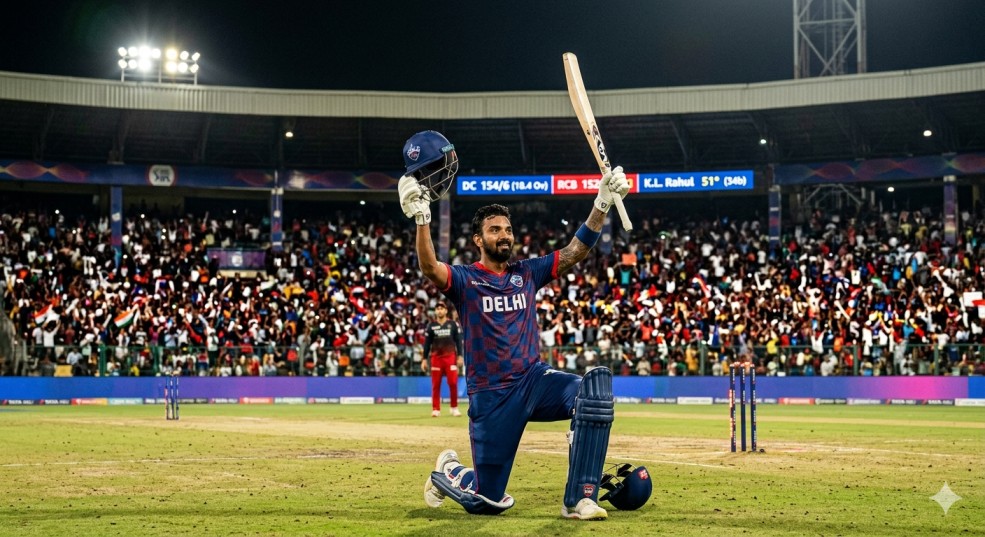
KL Rahul scored a crucial half-century to revive Delhi Capitals from 18/3 vs. RCB in IPL 2026 Match 26. The wicketkeeper-batter kept DC alive in their 176-run chase at Chinnaswamy.
The scene at the M. Chinnaswamy Stadium was nothing short of a nightmare for the Delhi Capitals as they began their pursuit of 176 against a rejuvenated Royal Challengers Bengaluru. Within the first two overs, the scoreboard read a catastrophic three wickets down for just three runs, as Bhuvneshwar Kumar produced a masterclass in swing bowling that threatened to end the contest before it had even truly begun.
The silence in the Delhi camp was deafening, yet amidst the chaos, one man remained unperturbed. KL Rahul, the captain and the technical heartbeat of this Delhi side, walked to the crease with the weight of the entire franchise on his shoulders. Returning to his home ground in Bengaluru, the stakes could not have been higher, and the narrative was set for either a humiliating collapse or a legendary rescue act.
KL Rahul Match Performance (vs RCB, 18 April 2026)
| Metric | Performance Detail |
| Runs Scored | 57 |
| Balls Faced | 34 |
| Strike Rate | 167.65 |
| Boundaries | 6 Fours, 2 Sixes |
| Entry Point | 18/3 (Over 2.5) |
| Partnership | 69 (42 balls) with Tristan Stubbs |
| Impact Score | Anchored chase from 3% win probability to 85% |
What followed was a clinic in modern-day anchor batting, as KL Rahul methodically began to rebuild the innings brick by brick. Understanding that any further loss of wickets would result in an early flight home. Rahul didn't just 'survive'; he countered. He knew the NRR could take a hit, so he started finding gaps early. That 57 off 34 wasn't a boring anchor job—it was a high-speed rescue mission.
For a reporter in the press box, it was fascinating to watch his transition from a survivalist to a controller; he didn't just play the balls, he dictated the field placements. By the time he reached his half-century, the initial shock of the 18/3 start had dissipated, replaced by a growing belief that the chase was still alive. This fifty wasn't just about runs; it was a psychological statement to the cricketing world that he remains one of India’s most complete wicketkeeper-batters under immense pressure.
While the Chinnaswamy crowd is notoriously loyal to their home team, there was an audible hum of respect for the way their local boy was handling the pressure. He used the short boundaries to his advantage, not by mindless slogging, but by using the pace of the RCB bowlers to guide the ball into the gaps with surgical precision.
This knock served as a reminder that T20 cricket isn't always won by the loudest hitters but often by the smartest thinkers. As a journalist, you could see the frustration building in the RCB camp as their early dominance was slowly eroded by Rahul’s unwavering composure. He took the game deep, allowing the likes of Axar Patel and, eventually, David Miller to have a platform to explode later in the evening.
Beyond the batting, his role as the wicketkeeper-captain adds another layer of complexity to his performance that often goes underappreciated. To maintain that level of concentration behind the stumps for twenty overs and then walk out to bat through a collapse requires a level of fitness and focus that few in the world can replicate. His tactical decisions during the RCB innings—particularly his bowling rotations that restricted them to 175—provided the very target he then set out to chase.
For the Delhi Capitals, having a leader who can deliver a 50-plus score in the face of an 18/3 catastrophe is the ultimate insurance policy. As the sun set over Bengaluru, it was clear that while Bhuvneshwar Kumar won the opening battle, KL Rahul was winning the war of attrition, proving once again that his technical mastery is his greatest weapon.
Ultimately, this half-century at the Chinnaswamy will be remembered as one of the most vital innings of the IPL 2026 season. It was a knock that rescued a season from the brink of a downward spiral and solidified Delhi's position as a team that refuses to be bullied. From a journalistic standpoint, Rahul’s performance offered a definitive answer to his critics who question his strike rate in the early stages of an innings; when your team is three down for three runs, the only strike rate that matters is the one that keeps you in the game.
He anchored the chase with a level of maturity that has become his trademark, ensuring that the fans at his home ground left the stadium talking about his brilliance. KL Rahul didn't just save the match for Delhi Capitals; he reaffirmed his status as a king of the crease who thrives when the world expects him to fail.
As we look toward the business end of the tournament, the "KL Rahul Rescue Act" will likely be cited as the turning point for Delhi’s championship aspirations. A captain who can stand tall while his top order crumbles around him is the backbone of any successful campaign, and Rahul has proven he has the grit to lead from the front.
The duel between his calm exterior and the fiery environment of the Chinnaswamy made for a journalistic narrative that perfectly captured the essence of the IPL. Whether he is keeping wickets or anchoring a 176-run chase, Rahul remains the most versatile asset in the Delhi toolkit, a player whose value cannot be measured simply by a scorecard but by the sheer resilience he displays when the lights are brightest.
Founder's Question: Rahul’s strike rate was over 160 today despite the collapse. Is this the "New KL" we've been waiting for—one who can anchor and accelerate simultaneously without letting the pressure get to him?