3 Reasons Why Rishabh Pant’s 68(50) Just Saved LSG’s Season at the SRH Fortress
Harshvardhan Singh Gaur
Apr 10, 2026 • 6 min read
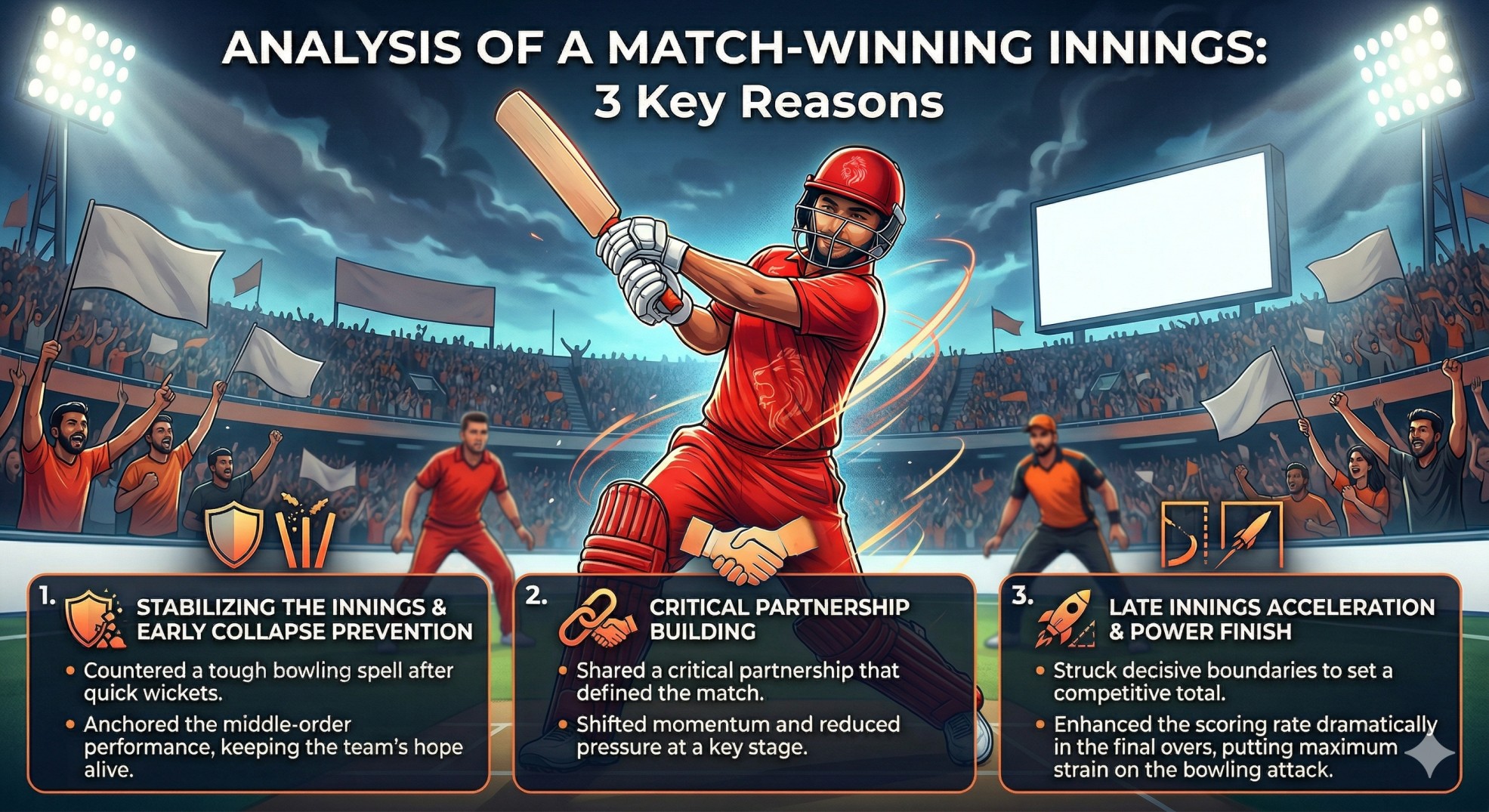
Captain Cool is Back! Pant’s 68 Snatches Victory from the Orange Army.
What made Rishabh Pant’s innings truly stand out wasn’t the numbers, but the timing of it. In a format where players often chase quick runs, Pant chose control over chaos, and that decision changed the game. The Lucknow Super Giants didn’t just win a match—they regained belief. On the other side, Sunrisers Hyderabad were reminded that even the most aggressive teams can be slowed down. Occasionally, it’s not about how fast you play, but how well you understand the moment—and Pant understood it perfectly.
Some innings look good on a scorecard, and then some innings quietly carry the weight of an entire campaign. Rishabh Pant’s 68 off 50 balls against Sunrisers Hyderabad may not immediately scream dominance in a tournament known for explosive hitting, but context changes everything. In a match where Lucknow Super Giants chased down 157 with just one ball to spare, this was not about flair — it was about survival, control, and a reminder that not every win in the Indian Premier League needs fireworks to matter.
What happened was a match that never quite settled into a rhythm. Hyderabad, a team known this season for their aggressive, almost relentless batting, suddenly looked hesitant. They finished at 156/9, a total that felt underwhelming not just because of the number but also how it was constructed. There were starts, but no authority. There were moments of intent, but no sustained pressure. It was as if the very identity that had defined SRH’s campaign so far had been muted. LSG, to their credit, didn’t allow them to find that rhythm. They didn’t need brilliance; they needed discipline, and they found it.
The chase, however, was anything but straightforward. A target of 157 might look modest in modern T20 cricket, but it came with its complications. The pitch wasn’t entirely flat, the ball wasn’t coming on perfectly, and the pressure of expectation—of knowing that this was a must-win kind of game—hung quietly over the innings. Early wickets didn’t create panic, but they created doubt. And in that space between panic and doubt is where matches are often lost.
Why did such a scenario happen? Why did a relatively small chase turn into a test of composure? Because LSG, as a team, has been searching for certainty. They’ve had talent, they’ve had moments, but they haven’t always had control. And chasing low totals can sometimes be more dangerous than chasing big ones. Big chases give you clarity — you know you have to attack. Smaller ones tempt you into caution, and caution can quickly turn into stagnation.
Pant’s innings sat right in the middle of that tension. It wasn’t aggressive enough to dominate, but it wasn’t passive enough to allow the game to drift. It was something in between—and that “in between” is often the hardest space to operate in. He rotated strikes, absorbed pressure, and picked his moments. There were no outrageous shots, no highlight-reel moments that would define the innings visually. But there was control, and control, in this context, was everything.
The first reason this innings matters is that it brought stability to a side that desperately needed it. LSG has often looked like a team capable of brilliance but vulnerable to collapse. Pant didn’t allow that narrative to play out here. He ensured that even when wickets fell, the innings didn’t unravel. That kind of presence—calm, measured, and slightly stubborn—can be more valuable than quick runs in a chase like this.
The second reason is about leadership, even if it isn’t always visible in traditional ways. Pant is not a conventional captain. He doesn’t always look composed, and he certainly doesn’t always play it safe. But in this inning, there was a noticeable shift. He seemed more aware of the situation, more willing to adapt his natural game to the needs of the team. That doesn’t mean he abandoned his instincts; it means he controlled them. And for a player like Pant, that’s a significant evolution.
The third reason is psychological. LSG needed this win not just for points, but for belief. Losing close games, struggling in chases, failing to control matches — these patterns can build quickly and become difficult to break. By seeing this game through, even if it wasn’t pretty, LSG has given itself a reference point. A reminder that they can handle pressure, that they can win games that aren’t going perfectly.
From SRH’s perspective, the match raises uncomfortable questions. This was a team that had built its identity on aggression, on overwhelming opponents early and never letting them recover. Here, that identity seemed to falter. Whether it was the pitch, the opposition, or simply an off day, the result was the same — a total that didn’t reflect their usual dominance. And once that dominance disappears, even temporarily, it forces a rethink. Are they too reliant on aggression? Do they have a plan B when things don’t go their way? These are questions that don’t need immediate answers, but they linger.
What this means going forward is where things get interesting. For LSG, this could be a turning point, but only if they build on it. One controlled chase doesn’t define a season, but it can reset it. It can provide clarity, reduce anxiety, and allow players to trust their roles a little more. For Pant, this innings might not be remembered as one of his most spectacular, but it could be remembered as one of his most important.
For SRH, the challenge is to respond without overreacting. One loss doesn’t undo what they’ve built, but it does test it. It forces them to prove that their approach is effective even when things go wrong. The best teams in the IPL are not the ones that avoid bad days but the ones that recover from them quickly.
In the end, this match was not about dominance or drama. It was about control, about understanding the moment, and about doing just enough—but doing it at the right time. Pant’s 68 may not headline highlight reels, but it told a story that matters just as much. A story of patience in a format that rarely rewards it, of composure in a game that often demands chaos, and of a team finding a way to win when losing would have been easier.
And sometimes, in a tournament as unpredictable as the IPL, that’s exactly the kind of innings that saves a season.